
Hydraulic vs. Electric Press Brakes: Which Technology Fits Your Production Needs?
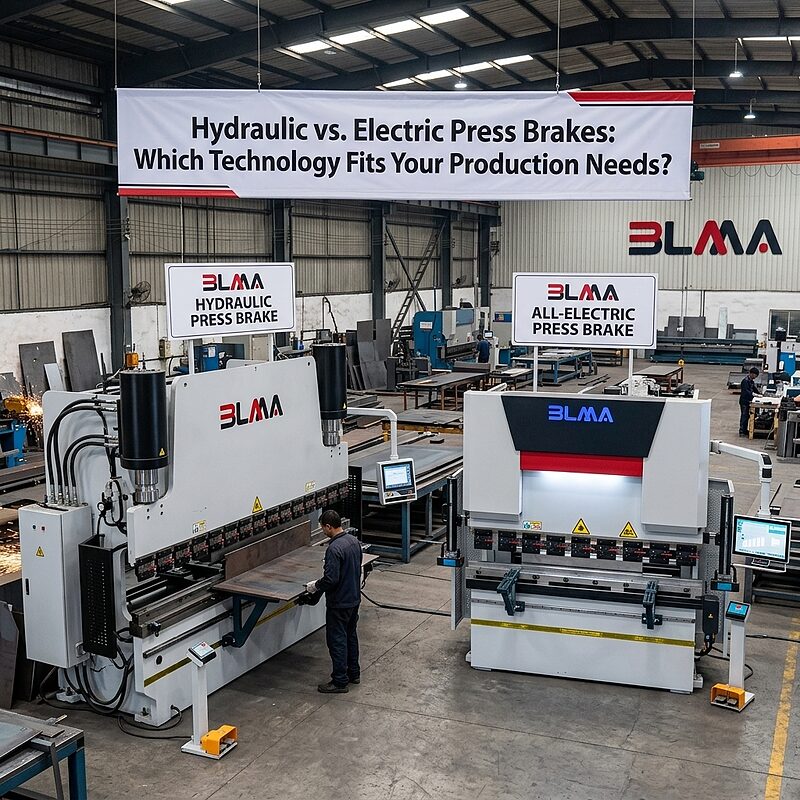
Choosing the right press brake is an important investment decision for any sheet metal fabrication business. The machine you select affects bending accuracy, production speed, energy consumption, maintenance requirements, and the overall cost of manufacturing each part.
Two technologies dominate the market: hydraulic press brakes and electric press brakes. Both can deliver precise, repeatable bending results, but they use different drive systems and offer different advantages depending on the application.
So, which is better: a hydraulic or electric press brake?
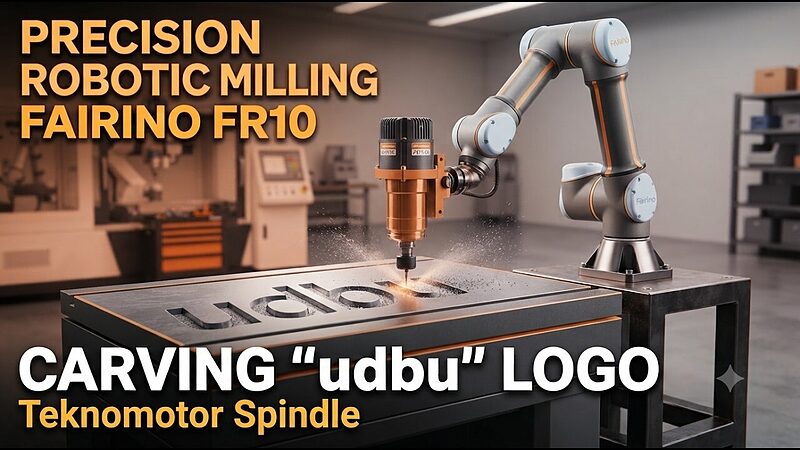
Precision Robotic Milling: Fairino FR10 Cobot with Teknomotor Spindle on TR-320FF
https://studio.youtube.com/video/tMUYXa52saY/edit
Can a CNC Machine Process a Crankshaft and Camshaft? A Practical Test of Holzmann Equipment
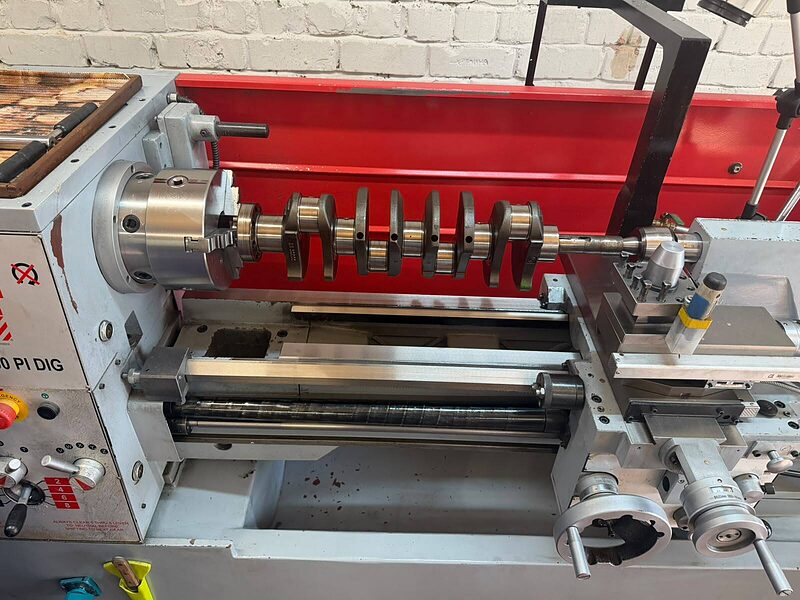
Machining complex metal parts on CNC equipment is often considered a task reserved for large industrial machines. This is especially true when working with components featuring complex geometries, such as crankshafts and camshafts.
But is a large, specialised machining centre really always necessary for these applications?
We decided to find out in practice. We used carefully selected Holzmann equipment, suitable tooling and our own experience in production process preparation.
The results of the test showed that with the right equipment and a properly planned machining process, it is possible to machine complex components using CNC technology.
Why the SMEC MCV 5700L Is One of the Best Vertical CNC Machining Centers in Its Class
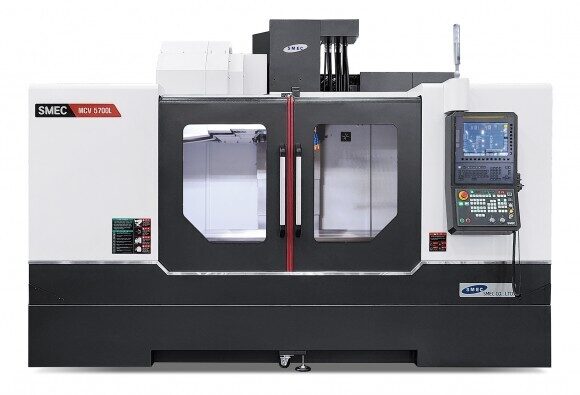 Why the SMEC MCV 5700L Is One of the Best Vertical CNC Machining Centers in Its Class
Choosing a vertical CNC machining center is an investment for the next 10–15 years. The right machine directly impacts productivity, machining accuracy, production costs, and your ability to deliver orders on time.
The SMEC MCV 5700L is designed for manufacturers that require high precision, exceptional reliability, and an extended machining area without paying a premium for the brand name.
Key Advantages of the SMEC MCV 5700L
1. Extended X-Axis Travel – 1,600 mm
Most machining centers in this class offer an X-axis travel of approximately 1,000–1,200 mm.
The SMEC MCV 5700L provides:
X-axis: 1,600 mm
Y-axis: 570 mm
Z-axis: 520 mm
This allows manufacturers to:
machine longer workpieces in a single setup;
reduce setup and repositioning time;
improve machining accuracy by eliminating multiple re-clamping operations.
2. High Rapid Traverse Speeds
Rapid traverse speeds of:
X-axis: 30 m/min
Y-axis: 36 m/min
Z-axis: 30 m/min
reduce non-cutting time and significantly improve productivity, especially in medium and high-volume production.
3. Powerful High-Speed Spindle
The SMEC MCV 5700L is equipped with:
12,000 rpm spindle
11 / 18.5 kW spindle power
BT40 spindle taper
This configuration is ideal for machining:
carbon steel;
stainless steel;
aluminum;
cast iron;
non-ferrous materials.
4. Large Work Table
The 1,700 × 570 mm table with a maximum load capacity of 1,000 kg enables reliable machining of large components and supports heavy fixtures.
5. 30-Tool Automatic Tool Changer
The 30-position automatic tool changer minimizes cycle times and allows complex machining operations to be completed without operator intervention.
For most manufacturing applications, a 30-tool magazine provides an excellent balance between flexibility and productivity.
Comparison with Popular Competitors
| Specification | SMEC MCV 5700L | DN Solutions DNM 5700 | Haas VF-4 |
|---|---|---|---|
| X-axis Travel | 1,600 mm | Approx. 1,050 mm | 1,270 mm |
| Spindle Speed | 12,000 rpm | 12,000 rpm | 8,100 rpm (standard) |
| Spindle Power | 18.5 kW | Approx. 18 kW | Depends on configuration |
| Tool Capacity | 30 | 30 | 20 (standard) |
| Value for Investment | Excellent | Higher purchase cost | Lower standard specification |
Considering its specifications, machining capacity, and operating costs, the SMEC MCV 5700L delivers one of the best price-to-performance ratios in its category.
Why Manufacturers Choose SMEC
Compared with many European and American machining center manufacturers, SMEC offers:
outstanding value for money;
a rigid machine structure designed for multi-shift production;
reliable FANUC CNC control;
excellent machining stability;
low operating and maintenance costs;
readily available spare parts;
easy integration with industrial automation and robotic systems.
For these reasons, SMEC machining centers are widely used in automotive manufacturing, general engineering, hydraulic component production, toolmaking, and precision metalworking industries.
Who Is the SMEC MCV 5700L Designed For?
The SMEC MCV 5700L is an excellent solution for manufacturers producing:
large structural components;
machine bases and plates;
medium-complexity molds and fixtures;
agricultural machinery components;
industrial equipment parts;
energy sector components;
aluminum components;
medium and high-volume production parts.
Conclusion
Compared with other vertical machining centers in its class, the SMEC MCV 5700L stands out thanks to its:
extended machining area;
powerful high-speed spindle;
excellent productivity;
industrial-grade reliability;
low total cost of ownership.
For manufacturers looking to increase production capacity while maximizing return on investment, the SMEC MCV 5700L is one of the smartest choices available.
Request Your Personalized Quote
Looking for a reliable vertical CNC machining center for your production?
The UDBU team will help you select the optimal SMEC MCV 5700L configuration, estimate productivity, recommend automation solutions, and prepare a customized commercial offer tailored to your manufacturing requirements.
Learn more about the SMEC MCV 5700L:
Contact UDBU today to receive expert advice, a return-on-investment calculation, and a competitive quotation for your next CNC machining center.
5-Axis Machining: Benefits, Drawbacks, and When It Is Truly Necessary
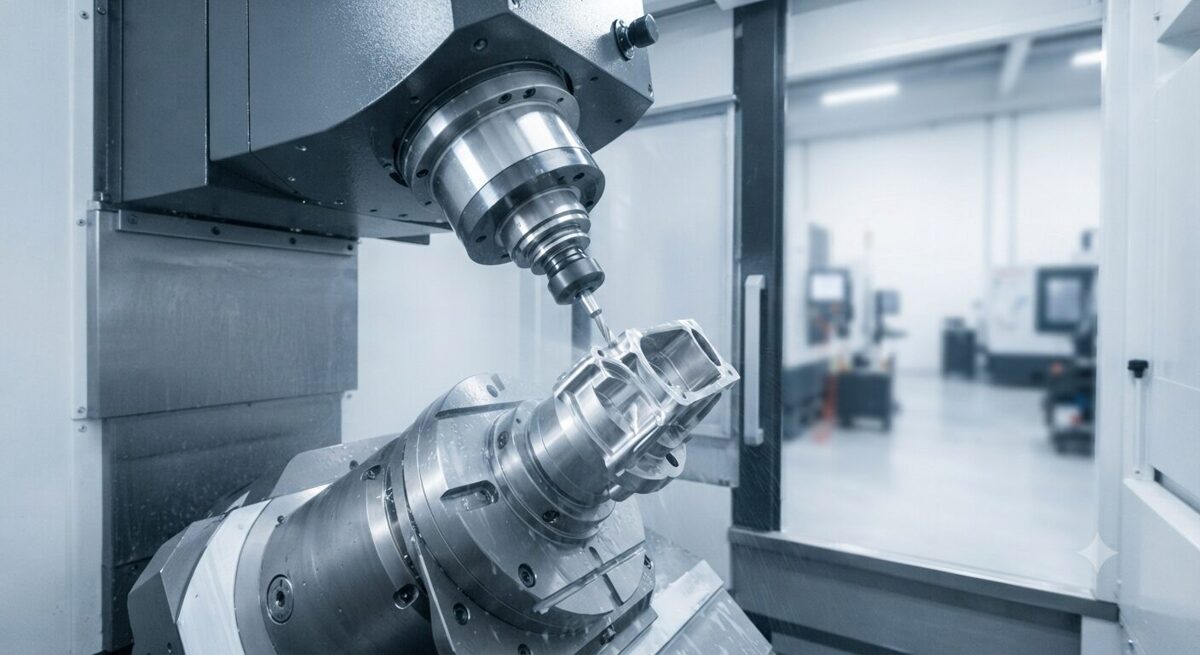 5-Axis Machining: Benefits, Drawbacks, and When It Is Truly Necessary
Modern manufacturing demands higher precision, faster production, and the ability to produce increasingly complex parts. As a result, 5-axis CNC machining has become the industry standard in sectors such as aerospace, automotive, medical manufacturing, and mold and die production. However, not every component requires 5-axis machining. In this article, we'll explain how it differs from traditional 3-axis machining, explore its key advantages and limitations, and discuss when investing in this technology is truly worthwhile.
What Is 5-Axis Machining?
A standard 3-axis CNC machine moves the cutting tool along three linear axes: X, Y, and Z. The workpiece remains fixed, and machining different surfaces often requires multiple setups and repositioning.
A 5-axis machining center adds two rotational axes, allowing either the workpiece or the cutting tool to rotate during machining. This enables the tool to approach the part from virtually any angle.
As a result, complex components can often be manufactured in a single setup while maintaining exceptional dimensional accuracy across all surfaces.
Key Benefits of 5-Axis Machining
1. Machining Complex Geometries
The greatest advantage of 5-axis machining is its ability to manufacture parts with complex three-dimensional shapes without additional setups.
This capability is particularly valuable in:
Aerospace manufacturing
Power generation
Medical device production
Turbine manufacturing
Mold and die making
2. Improved Accuracy
Every time a workpiece is repositioned, there is a risk of introducing alignment errors.
Since most operations in 5-axis machining are completed in a single setup, positioning errors are minimized, resulting in higher overall accuracy.
3. Reduced Production Time
Although programming is more sophisticated, total production time is often significantly shorter because:
Multiple setups are eliminated.
The workpiece is automatically repositioned.
Secondary operations are reduced.
These time savings become especially noticeable in prototype and low-volume production.
4. Superior Surface Finish
The cutting tool can maintain the optimal angle relative to the workpiece throughout the machining process.
This provides:
Better surface quality
Lower surface roughness
Less manual finishing and polishing
5. Longer Tool Life
A well-planned machining strategy distributes cutting forces more evenly across the cutting edge.
This reduces tool wear, improves machining stability, and extends tool life.
Drawbacks of 5-Axis Machining
Despite its many advantages, 5-axis machining is not the right solution for every application.
Higher Equipment Costs
5-axis CNC machining centers are considerably more expensive than conventional 3-axis machines.
In addition to the machine itself, manufacturers typically require:
Advanced CAD/CAM software
High-performance programming systems
Highly skilled operators and programmers
More Complex Programming
Generating toolpaths for 5-axis machining requires specialized expertise.
Programming errors can result in collisions between the cutting tool, the workpiece, and the machine itself.
Greater Operator Expertise Required
Operating a 5-axis machining center demands in-depth knowledge of:
CNC machining processes
Machine kinematics
Cutting tool selection
Machining strategies
When Is 5-Axis Machining Really Necessary?
5-axis machining delivers the greatest value when manufacturing:
Turbine blades
Impellers
Blisks
Medical implants
Complex molds and dies
Aerospace engine components
Parts with multiple angled or hard-to-reach surfaces
It is also highly beneficial for prototype development and custom manufacturing, where reducing lead times is critical.
When Is 3-Axis Machining Sufficient?
If a part has relatively simple geometry and most machining operations can be performed from a single direction, 5-axis machining may not be economically justified.
For these components, 3-axis CNC machining often provides:
Lower production costs
Simpler programming
High productivity
Cost-effective manufacturing
The most appropriate machining method should always be selected based on the part geometry, required tolerances, production volume, and overall manufacturing costs.
How to Choose the Right Machining Method
Selecting the optimal machining technology typically involves evaluating several factors:
Part complexity
Number of required setups
Accuracy requirements
Material type
Production volume
Target manufacturing cost
A thorough manufacturing feasibility analysis before production begins helps identify the most efficient and cost-effective machining strategy.
Conclusion
5-axis CNC machining offers significant advantages for manufacturing complex, high-precision components while minimizing setups. It can reduce production time, improve surface quality, and increase machining accuracy.
However, it is not a universal solution. For simpler components, traditional 3-axis machining often remains the more economical and practical choice.
Choosing the right machining technology at the planning stage helps optimize manufacturing costs, shorten lead times, and ensure that the finished part meets the required quality standards.
7 Metalworking Operations That a Cobot Can Take Over as Early as Tomorrow
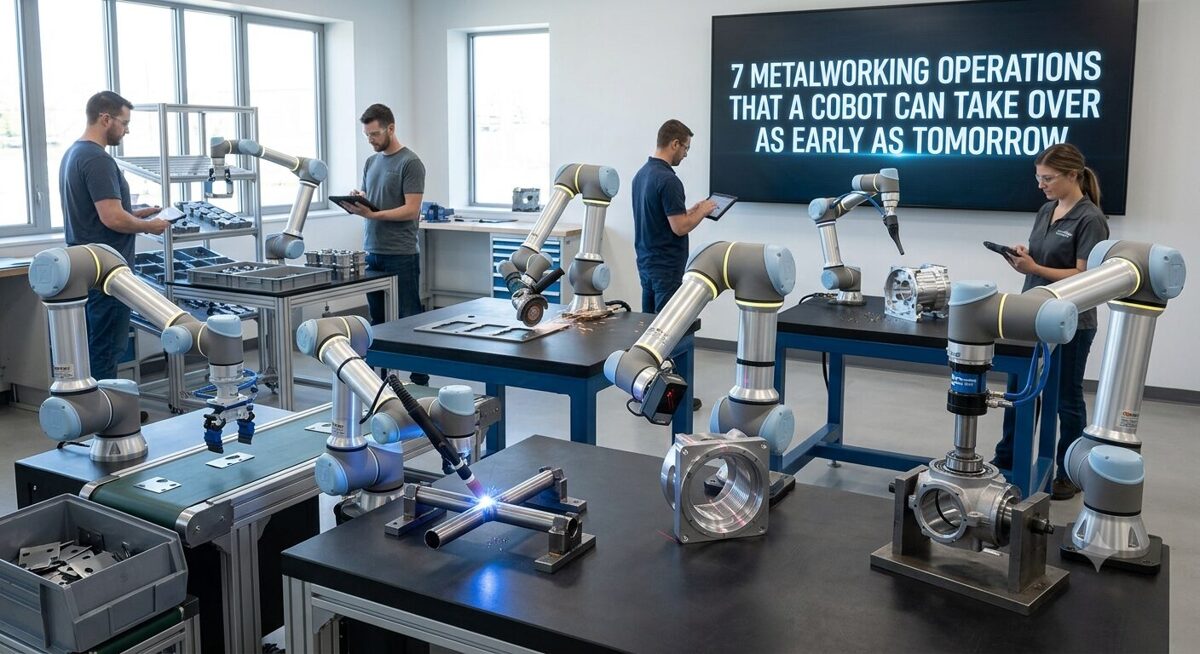 7 Metalworking Operations That a Cobot Can Take Over as Early as Tomorrow
The shortage of skilled workers, increasing quality requirements, and the need to improve productivity are pushing metalworking companies to search for new automation solutions. One of the most accessible and effective solutions today is cobots—collaborative robots that can safely work alongside humans and quickly adapt to different tasks.
Unlike traditional industrial robots, cobots do not require complex infrastructure or long implementation times. Many operations can be automated within just a few weeks. Let’s look at seven metalworking operations that a cobot can take over as early as tomorrow.
1. CNC Machine Loading and Unloading
CNC machine tending is one of the most common applications for cobots. A robot can automatically load raw blanks and unload finished parts from turning, milling, or grinding machines.
Benefits:
reduced machine downtime;
possibility to run night shifts;
consistent and precise part handling;
increased overall production efficiency.
This is especially effective in serial production, where operators repeatedly perform the same actions.
2. Part Palletizing and Packaging
After machining, parts must be sorted, placed into containers, or arranged on pallets. This process is time-consuming and physically repetitive.
A cobot can:
arrange parts according to a predefined pattern;
sort products by type;
prepare goods for shipment;
automatically track produced quantities.
3. Welding of Metal Structures
Modern cobots are successfully used in MIG/MAG and TIG welding processes. Easy programming makes them suitable even for small batches and frequently changing production.
Key advantages:
consistent weld quality;
reduced defect rates;
safer working conditions;
ability to operate continuously.
For many companies, robotic welding becomes the first step toward automation.
4. Surface Grinding and Deburring
Metal surface processing is one of the most physically demanding and repetitive operations. In manual work, quality often depends on operator fatigue.
A cobot can perform:
deburring;
edge grinding;
surface polishing;
final finishing.
Constant force and precise motion ensure consistent results for every part.
5. Quality Inspection Using Machine Vision
Equipped with machine vision systems, a cobot can automatically inspect dimensions, shapes, and surface quality of parts.
Automated quality control enables:
early detection of defects;
reduced number of complaints;
faster inspection processes;
objective quality data collection.
This is especially important for manufacturers with high precision requirements.
6. Part Transfer Between Workstations
In many factories, a significant amount of time is spent moving parts between machines.
A cobot can:
transfer parts between work areas;
serve multiple machines simultaneously;
feed intermediate storage buffers;
automate internal logistics.
This allows workers to focus on more complex and value-added tasks.
7. Coating and Surface Treatment
Painting, protective coating application, and similar processes require high precision and repeatability.
Using a cobot ensures:
even material application;
reduced material consumption;
lower defect rates;
improved workplace safety.
It also reduces the influence of human variability on final product quality.
Why Choose a Cobot?
The main advantage of collaborative robots is flexibility. They can be quickly adapted to new products, take up minimal space, and operate safely alongside humans without the need for complex protective fencing.
For metalworking companies, this means starting automation with a single workstation, achieving fast economic results, and gradually scaling automation across the entire production.
Conclusion
Cobots are no longer a future technology—they are already a practical tool for improving manufacturing efficiency. CNC machine tending, welding, grinding, quality inspection, and internal logistics are just some of the processes that can be automated without major infrastructure investments.
Companies that start adopting cobots today gain not only higher productivity but also a significant competitive advantage in a market where speed, quality, and flexibility are becoming decisive factors.
Want to find out which operations in your production can be automated?
UDBU helps companies implement cobots, industrial robots, and automation solutions for metalworking—from process analysis to full integration and training. Learn more about automation here: https://www.udbu.eu/automatizacija/
Common Mistakes in Designing Dust Extraction Systems in a Metalworking Workshop
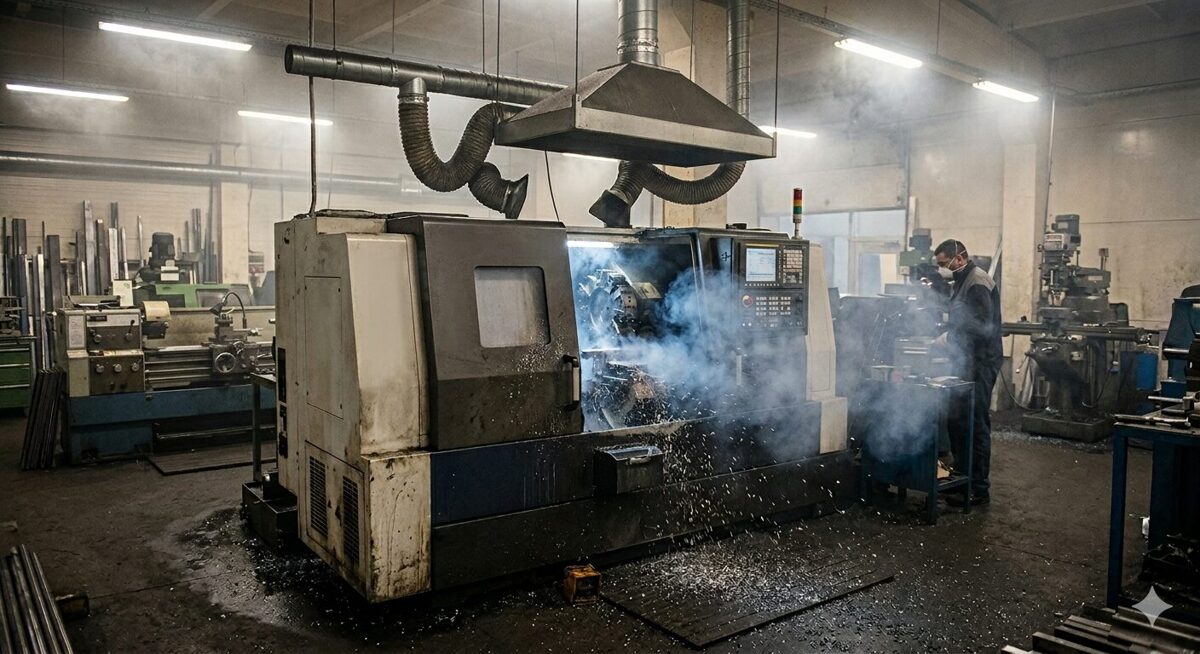 Common Mistakes in Designing Dust Extraction Systems in a Metalworking Workshop
When Seco and Sandvik truly justify their price — and where YG-1 becomes more cost-effective
 When Seco and Sandvik truly justify their price — and where YG-1 becomes more cost-effective
In the metal cutting tools market, there has long been a common belief: if you want a “serious” result — choose Seco Tools or Sandvik Coromant.
And indeed — these manufacturers offer very high stability, durability, and productivity.
However, in real production, the key question is almost always part cost.
And this is exactly where the Korean YG-1 often becomes significantly more economical in many applications.
When Seco and Sandvik are truly worth their price
Premium inserts are expensive not just because of the brand name.
The main advantage is coating technology and stable geometry. For example, Seco uses its proprietary Duratomic technology, which increases wear resistance at high temperatures and cutting speeds.
What this brings to production:
higher cutting speeds;
more predictable wear;
longer life per cutting edge;
fewer machine stops for tool changes;
stable part quality in serial production.
This is especially noticeable in:
large batch production;
24/7 machining;
automated lines;
machining difficult materials;
situations where every machine stop is costly.
In such conditions, the more expensive insert truly pays for itself — not through purchase price, but through reduced downtime and higher output.
Where YG-1 becomes economically advantageous
However, not every workshop operates under ideal conditions.
In many real-world tasks, inserts do not manage to use their full “premium” potential because other factors damage the tool:
insufficient machine rigidity;
vibration;
oxide scale;
interrupted cutting;
impact loads;
unstable material;
suboptimal cutting parameters.
And this raises the key question:
if a premium insert breaks just as quickly as a cheaper alternative, why overpay?
The price difference is significant
On average, YG-1 inserts cost about 40–50% less than comparable Seco or Sandvik inserts.
When machining:
mild steel;
aluminum;
simple parts;
small batches,
the difference in tool life is often minimal.
This means:
part quality remains the same;
tool life differs only slightly;
but tooling costs are almost cut in half.
That is why many companies gradually switch to YG-1 in operations where there is no sense in paying extra for “reserve performance” that is not actually utilized.
The most common mistake when choosing inserts
Many people evaluate tooling based only on purchase price.
But what really matters is cost per part.
Sometimes a tool is 50% more expensive but lasts twice as long — then it is more economical.
But sometimes the opposite happens:
a premium insert lasts only 10–15% longer;
but costs almost twice as much.
In that case, the economics clearly favor YG-1.
When switching to YG-1 makes the most sense
YG-1 is often the best choice if:
machine rigidity is moderate;
interrupted turning occurs;
workpieces have scale;
tools are exposed to impact loads;
universal (not aggressive) cutting parameters are used;
reducing cost is more important than maximizing cutting speed.
For many small and medium-sized manufacturers, this is the everyday reality.
Conclusion
If Seco or Sandvik inserts perform long, stable, and predictable in your process — switching them purely for minor savings usually does not make sense.
However, if tools regularly:
chip;
break;
wear out quickly due to harsh conditions;
fail to utilize their full lifespan,
then switching to YG-1 can reduce tooling costs by almost half without a noticeable loss in performance.
How to understand whether YG-1 is right for your shop
To accurately estimate the economics for your workshop, answer just three questions:
How many minutes of actual cutting time (or how many parts) does one Seco cutting edge currently last?
What material are you machining: stainless steel, mild steel, or cast iron?
Do the inserts wear gradually, or do they tend to chip and fail prematurely?
After that, it becomes possible to objectively compare cost per part and determine whether switching to YG-1 will bring real savings in your production.
How to Choose Cutting Parameters for Stainless Steel Machining on SMEC CNC Machines
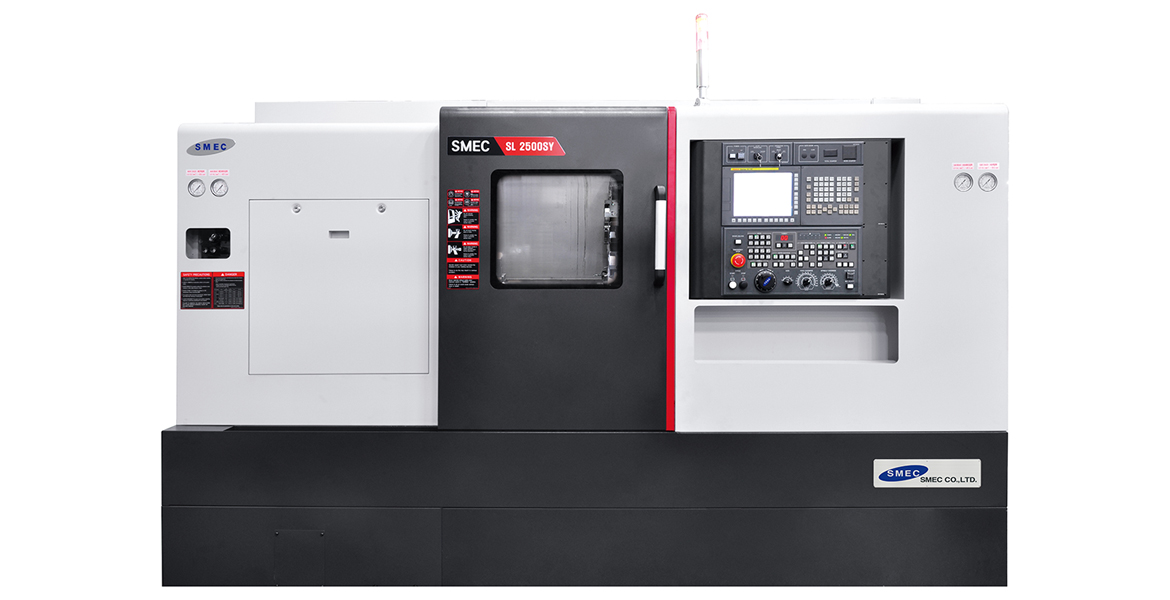 How to Choose Cutting Parameters for Stainless Steel Machining on SMEC CNC Machines
Stainless steel is considered one of the most challenging materials for machining. Its high toughness, tendency to work harden, and intense heat generation require carefully selected cutting parameters. This is especially important when working with modern SMEC CNC machines, whose high rigidity and powerful spindles allow efficient machining of both AISI 304 and heat-resistant stainless steels.
Why Stainless Steel Is Difficult to Machine
The main challenges of stainless steel machining include:
rapid cutting tool wear;
built-up edge formation on the cutting insert;
excessive heat in the cutting zone;
vibrations caused by insufficient rigidity;
surface work hardening due to incorrect feed rates.
Because of these factors, standard cutting parameters used for carbon steel are not suitable for stainless steel.
Factors That Affect Cutting Parameters
When setting up a CNC machine, the following factors must be considered:
stainless steel grade;
machining operation type (turning, milling, drilling);
cutting tool material;
rigidity of the machine-tool-workpiece system;
coolant usage;
spindle power and guideway design.
For example, the SMEC SL 2000 CNC Turning Center features spindle speeds up to 6000 rpm and spindle power up to 18.5 kW, enabling stable stainless steel machining even under heavy cutting loads.
Recommended Cutting Parameters for Stainless Steel
Turning AISI 304 with Carbide Inserts
| Parameter | Rough Machining | Finish Machining |
|---|---|---|
| Cutting Speed (Vc) | 120–180 m/min | 180–250 m/min |
| Feed Rate (f) | 0.20–0.40 mm/rev | 0.05–0.15 mm/rev |
| Depth of Cut (ap) | 1.5–4 mm | 0.2–1 mm |
The most important rule is to avoid excessively low feed rates. Stainless steel hardens quickly, causing the tool to rub the surface instead of cutting effectively.
How SMEC Machines Improve Stainless Steel Machining
Modern SMEC CNC machines provide several advantages when machining difficult materials.
High Structural Rigidity
The SL series uses a reinforced machine structure and box guideways that reduce vibration during heavy-duty cutting operations.
Powerful Spindle Performance
For example, the SMEC SL 2500SY CNC Turning Center is equipped with a spindle power of up to 26 kW and supports machining of parts longer than 1200 mm.
Fast Axis Rapid Traverse Rates
High rapid traverse speeds reduce idle time and improve productivity in serial production environments.
Live Tooling Capability
Machines with “M” and “Y” configurations support milling, drilling, and tapping in a single setup, which is especially valuable for complex stainless steel components.
Recommended Tooling for Stainless Steel
For stainless steel machining, it is recommended to use:
carbide tools with TiAlN or AlTiN coating;
inserts with positive geometry;
sharp cutting edges;
through-tool coolant systems.
When machining at high spindle speeds on SMEC machines, balanced high-quality tooling becomes especially important.
Common Mistakes When Selecting Cutting Parameters
Cutting Speed Too Low
This causes work hardening and accelerates tool wear.
Feed Rate Too Small
The cutting tool overheats and damages the surface finish.
Insufficient Cooling
Stainless steel has poor thermal conductivity, so overheating occurs very quickly.
Excessive Tool Overhang
Even highly rigid machines require minimal tool overhang to prevent vibration.
Practical Example for the SMEC SL 2000
When machining a 60 mm diameter AISI 304 shaft on the SMEC SL 2000 CNC Turning Center, the following parameters can be used:
Vc = 160 m/min;
spindle speed ≈ 850 rpm;
feed rate = 0.25 mm/rev;
depth of cut = 2 mm;
CNMG insert with TiAlN coating.
These parameters provide stable chip formation, minimal vibration, and long tool life.
Conclusion
Proper selection of cutting parameters for stainless steel machining directly affects tool life, surface quality, and CNC machining productivity. Thanks to their high rigidity, powerful spindles, and advanced control systems, SMEC machines are well suited for both serial production and high-precision stainless steel machining applications.
5 Signs That Your Workshop Air Cleaning System Needs Modernization
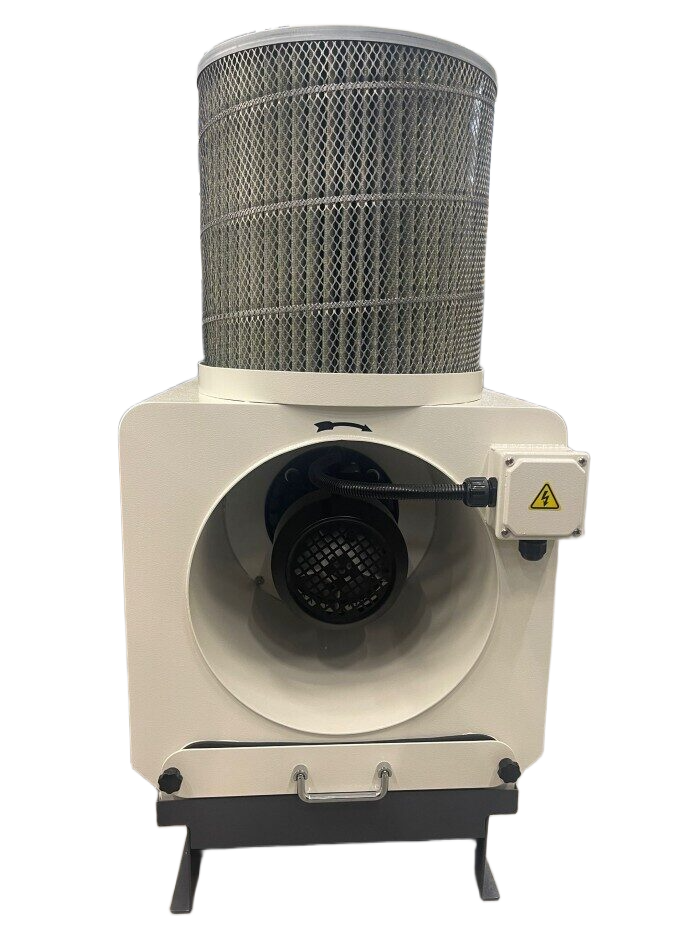 5 Signs That Your Workshop Air Cleaning System Needs Modernization
In modern metalworking, air quality has become just as important as machining precision or production efficiency. During CNC machining, oil mist, coolant aerosols, and fine particles are generated and gradually accumulate in the working environment. If the air cleaning system can no longer effectively handle this contamination, it affects employee comfort, equipment performance, and overall operating costs.
In many cases, problems start unnoticed but become increasingly obvious over time. Below are five key signs that indicate it is time to modernize your air cleaning system.
1. Oil residue appears on equipment and surfaces
One of the first warning signs is a sticky oil film on CNC machines, tools, lighting fixtures, or floors. This means that oil aerosols are not being properly captured and are settling throughout the workshop.
Such contamination not only creates dirt but also:
reduces electronic performance;
increases equipment wear;
makes maintenance more difficult;
creates additional safety risks.
Modern oil mist collection systems help significantly reduce this issue by capturing aerosols directly at their source.
2. A constant oil or coolant odor in the workshop
If a strong odor persists in production areas over time, it indicates a high concentration of airborne contaminants.
This is especially common in:
intensive CNC machining processes;
grinding operations;
high-speed milling;
enclosed work areas with insufficient ventilation.
Long-term exposure to contaminated air negatively affects the working environment and reduces employee comfort. That is why more and more companies are choosing local air cleaning systems that capture oil mist directly at the point of generation.
3. Filters need to be replaced too often
If ventilation system filters clog quickly and their efficiency drops significantly, the existing system may no longer be suitable for production loads.
This typically indicates:
insufficient number of filtration stages;
excessive system load;
outdated technology;
inefficient air circulation.
Modern systems use multi-stage filtration, which separates larger particles before they reach the main filter. This reduces maintenance frequency and operating costs.
4. The workshop becomes hot and stuffy
Outdated ventilation systems often operate by completely exhausting contaminated air outdoors. This places additional load on heating and ventilation systems.
As a result, companies experience:
higher energy consumption;
unstable microclimate control;
uncomfortable working conditions;
increased temperature and humidity levels.
Modern air cleaning systems allow filtered air to be returned back into the workshop, reducing energy losses and maintaining a more stable working environment.
5. Production has expanded, but the ventilation system has not been updated
A very common situation is when companies invest in new CNC machines and increase production volumes, while the air cleaning system remains unchanged for many years.
This leads to:
higher aerosol concentrations;
faster equipment contamination;
increased maintenance costs;
poorer air quality.
In such cases, compact local oil mist collectors are an effective solution, as they can be installed directly on CNC machines without complex ventilation modifications.
Effective solution for modern metalworking
One practical solution is the Precitonix OMM 150 oil mist collector. It is designed for local air cleaning in metalworking processes where oil aerosols and coolant mist are generated.
The system provides:
efficient multi-stage filtration;
compact installation near the machine;
low noise level;
reduced maintenance requirements;
cleaner and safer working conditions.
Such solutions not only improve air quality but also extend equipment lifespan and reduce overall operating costs.
Conclusion
Air quality in a metalworking workshop directly affects safety, equipment reliability, and operational efficiency. If oil residues appear, persistent odors are present, or the ventilation system no longer provides a comfortable working environment, it is a clear sign that modernization is needed.
Timely investment in modern oil mist collection systems helps create a safer, cleaner, and more efficient production environment in the long term.
UDBU Begins Cooperation with FAIRINO in Industrial Robotics
 UDBU Begins Cooperation with FAIRINO in Industrial Robotics
FAIRINO and the UDBU team announce the start of cooperation in the field of industrial robotics and manufacturing process automation.
The partnership is focused on developing local projects for the implementation of collaborative robots (cobots) across various industries — from metalworking and assembly lines to packaging, logistics, and production processes involving repetitive operations.
FAIRINO collaborative robots enable companies to transition more efficiently to modern automation solutions through:
safe human-robot collaboration;
flexible integration into existing production processes;
reduced workload for employees;
improved process stability and quality;
optimization of manufacturing costs.
As part of the cooperation, UDBU will focus on the development and implementation of local automation solutions for regional enterprises, including:
production process analysis;
design of robotic cells;
equipment integration;
robot programming and configuration;
project maintenance and technical support.
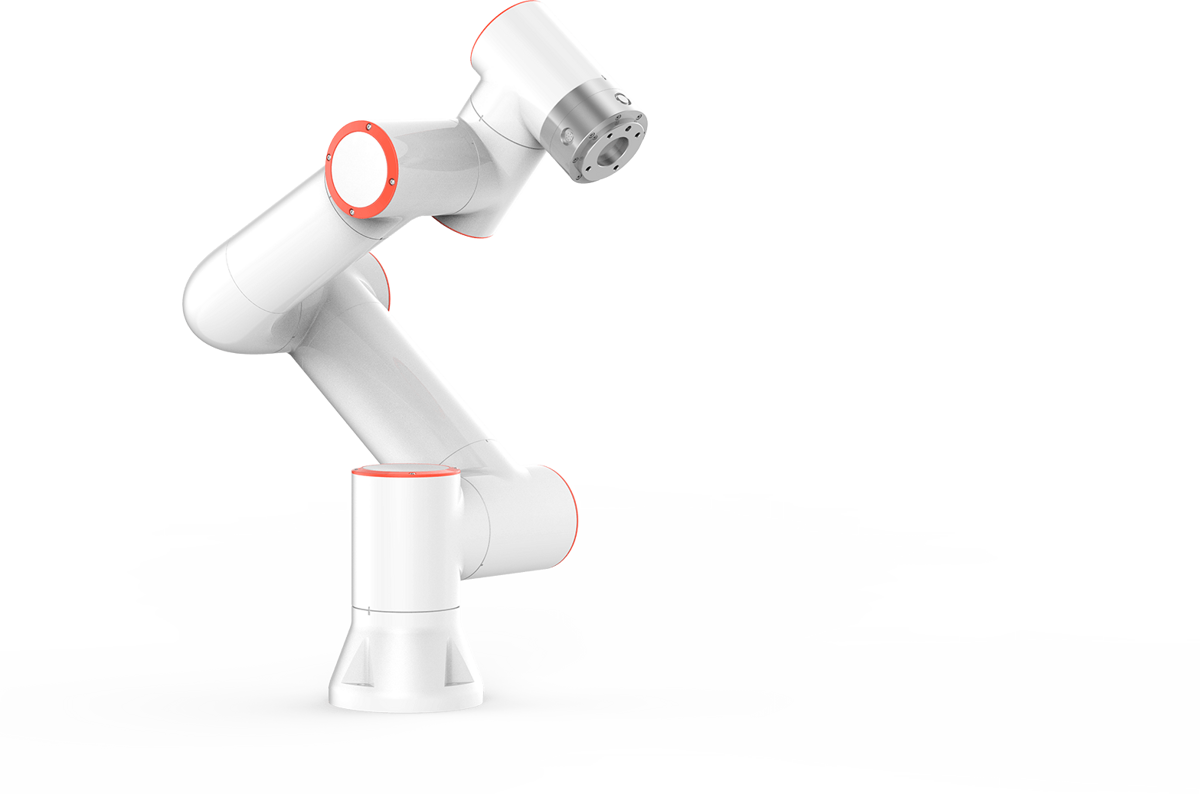
The main goal of the partnership is to make modern robotic automation solutions more accessible for local businesses and to accelerate the digital transformation of manufacturing.
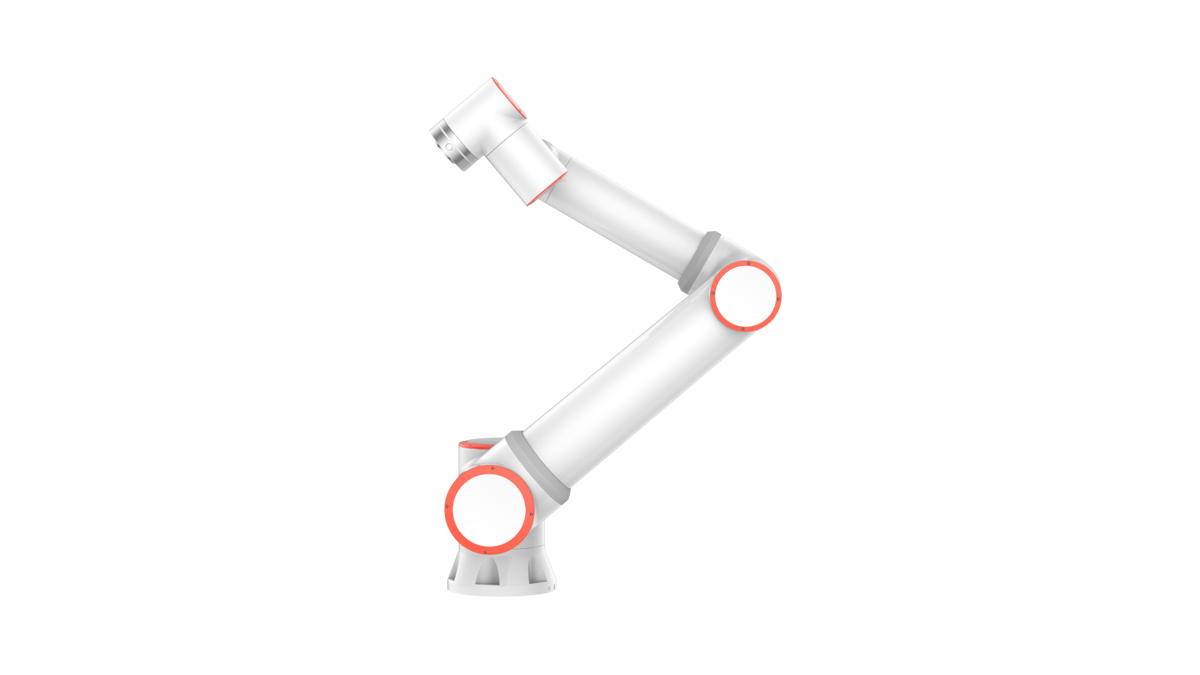
The use of collaborative robots is becoming increasingly important due to the growing demand for automation, shortages of qualified personnel, and the need for higher production efficiency.
UDBU considers this direction strategically important for the development of engineering and manufacturing competencies, as well as for creating new industrial automation solutions.
Adaptive Milling Strategies in CAM Systems: Tables, Parameters, and Comparison of Fusion 360, NX, and Mastercam
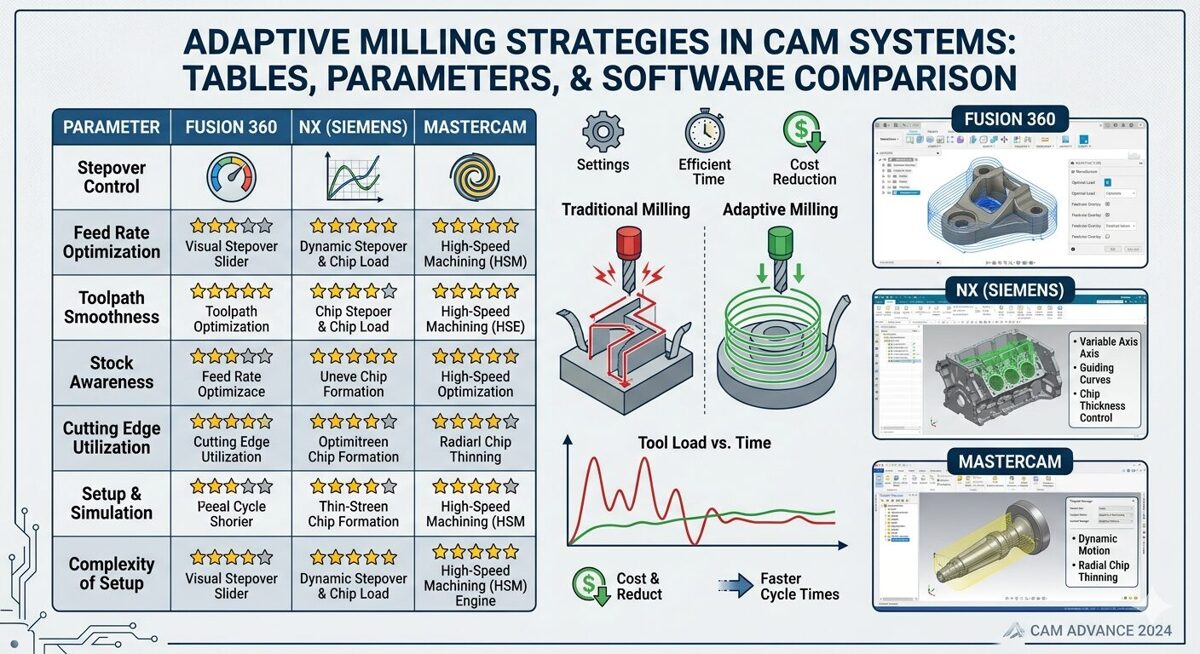 Adaptive Milling Strategies in CAM Systems: Tables, Parameters, and Comparison of Fusion 360, NX, and Mastercam
Introduction
Adaptive milling is one of the key technologies in high-efficiency machining (HEM), enabling productivity increases of 2–5 times by controlling tool load and optimizing toolpaths.
Unlike conventional strategies:
the tool operates with a constant chip thickness
radial load is reduced
axial depth of cut is increased
The result is reduced tool wear, higher speeds, and improved surface quality.
Table 1 — Comparison of CAM Systems for Adaptive Milling
| Parameter | Fusion 360 | Siemens NX | Mastercam |
|---|---|---|---|
| Strategy Type | Adaptive Clearing | Adaptive Roughing | Dynamic Milling |
| Load Control | Automatic | Constant chip load | Dynamic Motion |
| 5-axis Machining | Limited | Full | Full |
| CAD Integration | Built-in | Built-in | Partial |
| Cloud Capabilities | Yes | Partial | No |
| Complexity Level | Low | High | Medium |
Conclusion:
Fusion 360 is suitable for quick adoption and small workshops
Siemens NX is ideal for complex and 5-axis machining
Mastercam offers a balanced, universal solution
Table 2 — Efficiency of Adaptive Milling
| Metric | Conventional Machining | Adaptive Milling | Change |
|---|---|---|---|
| Machining Time | 100% | 20–40% | −60–80% |
| Tool Life | 100% | 150–300% | +50–200% |
| Material Removal Rate | 100% | 200–500% | +100–400% |
| Surface Roughness | Ra 3.2 | Ra 0.8–1.6 | up to −75% |
| Energy Consumption | 100% | 70–85% | −15–30% |
This demonstrates that adaptive milling is significantly more efficient across all key metrics.
Table 3 — Key Parameters for Adaptive Machining
| Parameter | Range | Steel | Aluminum |
|---|---|---|---|
| Radial Depth of Cut (ae) | 5–25% D | 7–12% | 15–20% |
| Axial Depth of Cut (ap) | 1–5D | 2–3D | 3–4D |
| Feed per Tooth | 0.05–0.3 mm | 0.1–0.15 | 0.2–0.25 |
| Cutting Speed | 50–500 m/min | 120–180 | 300–450 |
| Minimum Radius | 0.5–3D | 1–1.5D | 0.5–1D |
Key principle:
a small radial depth (ae) combined with a large axial depth (ap) delivers maximum efficiency.
Table 4 — Recommendations by Material
| Material | Tool | Coating | Recommended CAM System |
|---|---|---|---|
| Carbon Steel | Carbide end mill | TiAlN | NX / Mastercam |
| Stainless Steel | Variable pitch tool | AlCrN | Mastercam |
| Aluminum 6061 | Sharp cutting edge | Uncoated | Fusion 360 |
| Titanium | Reinforced tool | TiAlN + DLC | NX |
| Inconel | Ceramic tool | Al2O3 | NX |
How Adaptive Milling Works
The core principle is maintaining a constant load on the cutting tool.
This is achieved through:
trochoidal toolpaths
automatic feed rate adjustment
geometry-aware toolpath generation
Efficiency formula:
Efficiency = (T_conventional − T_adaptive) / T_conventional × 100%
Strategy Setup in CAM Systems
Fusion 360
Optimal Load: 0.5 mm (for aluminum)
Keep Tool Down: enabled
Stock to Leave: 0.2 mm
Best suited for quick implementation and training.
Siemens NX
ae: 7–12%
ap: 2–3D
AI-assisted parameter optimization
Provides maximum control and precision.
Mastercam
Dynamic Milling
Step: 5–15%
Built-in finishing passes
Well suited for production environments.
Common Mistakes
Excessive ae leading to tool overload
Insufficient ap reducing efficiency
Incorrect feed rates causing vibration
Ignoring machine rigidity
Machine Requirements
Minimum requirements:
rigidity ≥ 50 N/µm
spindle speed ≥ 10,000 rpm
power ≥ 15 kW
Implementation Plan for Businesses
| Stage | Timeline |
|---|---|
| Audit | 1–2 months |
| Training | 2 months |
| Pilot Project | 3–4 months |
| Scaling | up to 6 months |
Conclusion
Adaptive milling provides:
significantly reduced machining time
extended tool life
improved surface quality
System selection:
small workshops — Fusion 360
complex parts — Siemens NX
general-purpose manufacturing — Mastercam
How to Choose Between an Industrial Robot and a Cobot in Metalworking
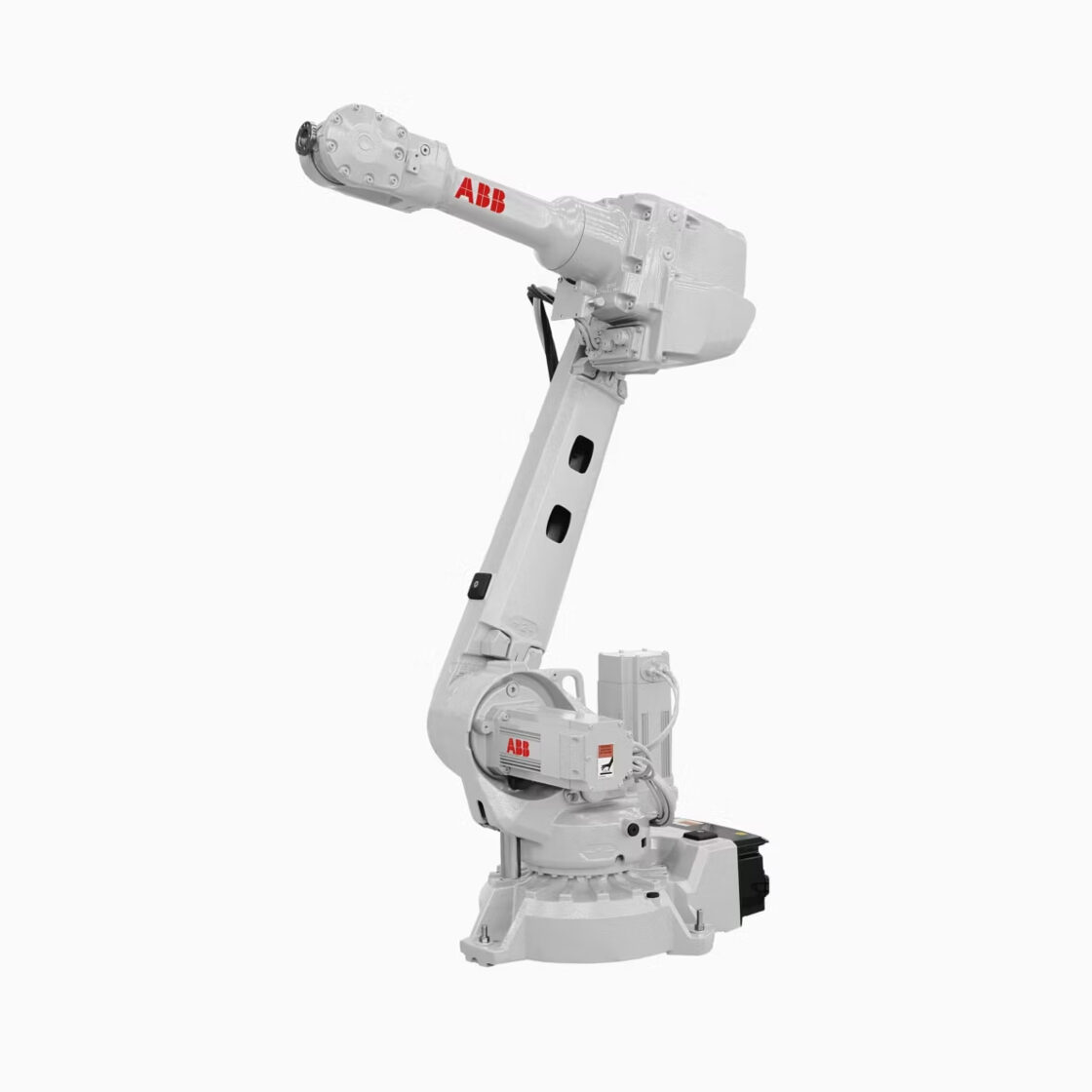 How to Choose Between an Industrial Robot and a Cobot in Metalworking
Automation in metalworking is no longer a question of “whether,” but rather which technology to choose.
The key dilemma: industrial robot or cobot?
Making the wrong choice at this stage can cost tens of thousands of euros and months of implementation time. Let’s break down how to make the right decision.
What’s the Key Difference?
The difference between these two types of robots is not just in design, but in how they are used:
Industrial robots — powerful, high-speed, fully automated systems
Cobots (collaborative robots) — flexible assistants designed to work alongside humans
Cobots are built for safe human interaction, while industrial robots typically operate in isolated, guarded environments.
Comparison: Robot vs Cobot in Metalworking
| Criteria | Cobot | Industrial Robot |
|---|---|---|
| Payload | up to ~25 kg | up to 2000+ kg |
| Speed | low–medium | high |
| Safety | no fencing required | requires safety systems |
| Implementation | fast (days/weeks) | complex (weeks/months) |
| Flexibility | high | low |
| Production type | small/medium batches | mass production |
| ROI | 8–18 months | 18–36 months |
When to Choose a Cobot
Cobots are ideal for metalworking if you have:
1. Frequent part changes
Low-volume or high-mix production requires flexibility.
Cobots can be reprogrammed in hours, not weeks.
2. Labor shortages
A cobot acts as an extra pair of hands:
CNC machine tending
part feeding
basic quality control
3. Limited floor space
No safety cages required — significant space savings.
4. Fast deployment
Programming is intuitive and quick.
In most small and medium-sized operations, cobots deliver faster ROI and lower implementation costs.
When You Need an Industrial Robot
There are tasks where cobots are simply not enough:
1. Heavy parts
If parts exceed 20–25 kg, an industrial robot is required.
2. High productivity demands
If you need:
24/7 operation
very short cycle times
mass production
Industrial robots operate significantly faster.
3. Harsh environments
high temperatures
intensive welding
aggressive conditions
A Practical Rule of Thumb
To simplify your decision:
Choose a cobot if:
production volume is up to ~50,000 parts/year
flexibility is critical
operators work nearby
fast deployment matters
Choose an industrial robot if:
production is high-volume
parts are heavy
speed is critical
minimal human interaction is required
The Most Common Mistake
Many companies choose an industrial robot “just in case,” and later face:
complex integration
high costs
underutilization
lack of flexibility
As a result, the system does not deliver expected value.
Conclusion
Cobots do not replace industrial robots — they complement them.
Cobot = flexibility and fast results
Industrial robot = power and scale
The right choice always depends on your specific application.
A Proven Solution for Metalworking
If you are considering automating CNC tending, welding, or part handling, take a look at a reliable solution:
This robot offers high precision and reliability, making it suitable for a wide range of metalworking applications — from machine tending to complex operations.
Oil Mist Collectors for Small Workshops: Optimal Solutions on a Limited Budget
 Oil Mist Collectors for Small Workshops: Optimal Solutions on a Limited Budget
Small metalworking workshops often have to balance cost and working environment quality. However, ignoring oil mist can become far more expensive in the long run than addressing it properly.
In this article, we’ll look at how to choose an efficient oil mist collector on a limited budget—without compromising performance or safety.
Why Oil Mist Is a Problem Even in Small Workshops
Even one or two CNC machines can generate a significant amount of oil aerosol. The consequences include:
- reduced visibility in the work area
- oily deposits on surfaces and equipment
- increased risk of slipping
- negative impact on employee health
- accelerated wear of machinery
Important: in smaller spaces, contamination concentration is often higher than in large industrial facilities.
How to Determine Required Capacity
Budget optimization starts with proper calculation.
Key parameters:
- number of machines
- enclosure/work area volume
- type of coolant used
- operating mode (continuous vs intermittent)
Practical tip:
for a small workshop with 1–3 CNC machines, a capacity of 400–1200 m³/h per machine is typically sufficient.
Types of Budget-Friendly Solutions
1. Compact Local Collectors
Installed directly on the machine.
Pros:
- lower installation cost
- easy integration
- minimal ductwork required
Cons:
- limited capacity
- less effective under heavy-duty operation
Best for: small workshops with limited space
2. Centralized Systems (Mini Configuration)
One unit serves multiple machines.
Pros:
- better overall control
- fewer maintenance points
Cons:
- higher initial cost
- requires system design
Best for: workshops planning future expansion
3. Electrostatic Filters
Highly effective for fine oil mist.
Pros:
- high filtration efficiency
- longer filter service life
Cons:
- higher upfront cost
- requires regular cleaning
Best for: applications where air quality is critical
How to Reduce Costs Without Losing Quality
Choose the Right Filtration Level
No need to overpay for HEPA if the process doesn’t require it.
Optimize Operating режим
The collector does not need to run at full capacity all the time.
Perform Regular Maintenance
Dirty filters = higher energy consumption.
Use a Modular Approach
Start with one unit and expand later if needed.
Common Mistakes
- choosing an underpowered unit
- ignoring airflow calculations
- incorrect installation location
- lack of maintenance
- focusing only on price instead of total cost of ownership
When Does the Investment Pay Off?
Even in a small workshop, an oil mist collector can pay for itself by:
- reducing cleaning costs
- extending equipment lifespan
- improving working conditions
- minimizing downtime
In many cases, ROI is achieved within 6–18 months.
Conclusion
Small workshops don’t need complex or expensive systems to effectively control oil mist. A properly selected compact collector can provide:
- a safer working environment
- consistent production quality
- controlled operational costs
The key is to base your decision on actual operating conditions—not just price.
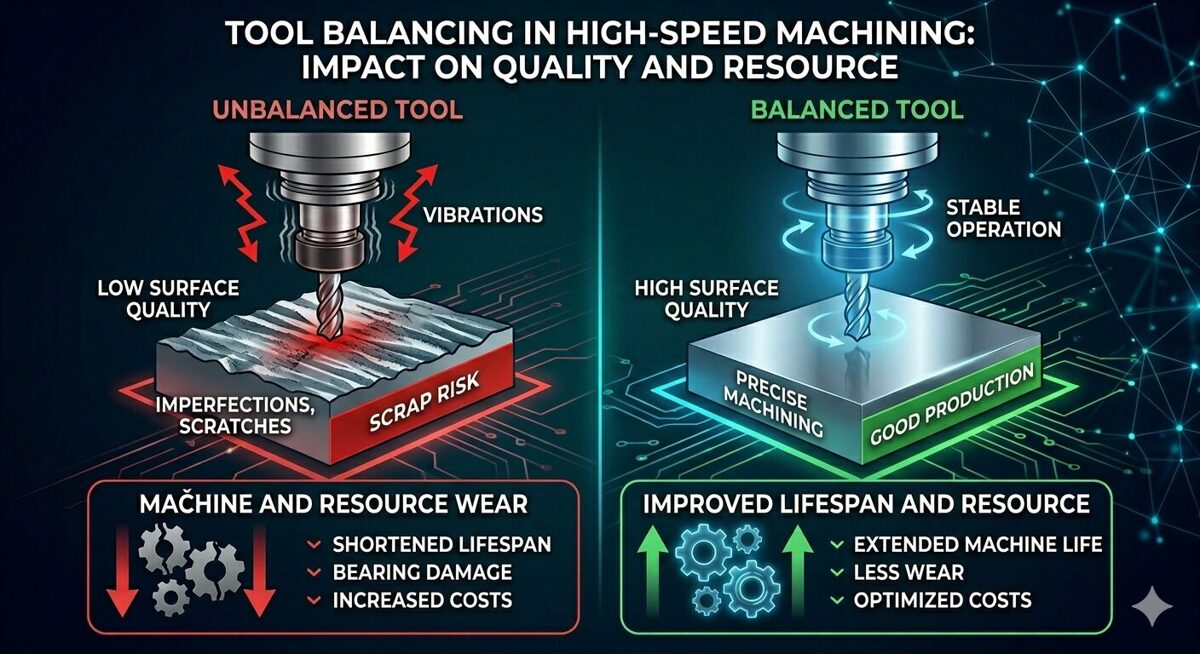 Tool Balancing in High-Speed Machining: Impact on Quality and Tool Life
High-speed machining (HSM) places increased demands on the entire manufacturing system. One of the key factors that directly affects machining quality, tool life, and machine longevity is tool balancing.
Ignoring this aspect leads to vibrations, accelerated wear, and defects—even when using modern equipment and high-quality tools.
What Is Tool Balancing
Tool balancing is the process of evenly distributing the mass of a rotating tool relative to its axis of rotation.
If the center of mass does not align with the rotation axis, imbalance occurs, generating centrifugal forces and vibrations at high speeds.
Even minimal deviation at high rotational speeds (10,000–30,000 RPM and above) can lead to critical consequences.
Causes of Imbalance
The main sources of imbalance include:
manufacturing inaccuracies of the tool or holder
contamination (chips, coolant, dust)
wear of clamping surfaces
improper tool assembly
material inhomogeneity
spindle or clamping system runout
How Imbalance Affects the Machining Process
1. Reduced Surface Quality
Vibrations cause:
surface waviness
runout marks
increased roughness
2. Accelerated Tool Wear
Imbalance leads to:
uneven load on cutting edges
localized overheating
chipping and microcracks
As a result, tool life is significantly reduced.
3. Increased Load on the Spindle
Vibrations increase:
bearing wear
risk of spindle failure
maintenance frequency
4. Noise and Process Instability
higher noise levels
reduced process repeatability
increased risk of defects
Balancing Grades
Balancing is typically evaluated according to ISO standards (e.g., G2.5, G6.3, etc.).
G6.3 — standard level for general machining
G2.5 — recommended for high-speed machining
G1.0 and above — for ultra-precision operations
The lower the value, the higher the balancing accuracy.
Balancing Methods
1. Static Balancing
suitable for simple tools
considers mass distribution in a single plane
2. Dynamic Balancing
considers mass distribution along the entire tool length
essential for high-speed machining
Practical Methods to Eliminate Imbalance
using balancing machines
tool holders with adjustable mass
adding or removing balancing screws
using precision tool holders (HSK, hydraulic chucks, shrink-fit holders)
Best Practices for Production
To minimize the impact of imbalance:
always clean the tool before installation
check runout and clamping
use high-quality tooling systems
balance the complete assembly (tool + holder)
follow recommended spindle speeds
perform regular inspections
Economic Benefits
Proper balancing delivers measurable advantages:
tool life increase by up to 30–50%
reduction in scrap rates
improved surface quality
lower spindle repair costs
increased overall productivity
Conclusion
Tool balancing is not an optional step but a critical requirement for stable and efficient high-speed machining.
Investing in proper balancing pays off through improved product quality, longer tool life, and reduced operating costs.
YG-1 representatives visited leading Latvian companies
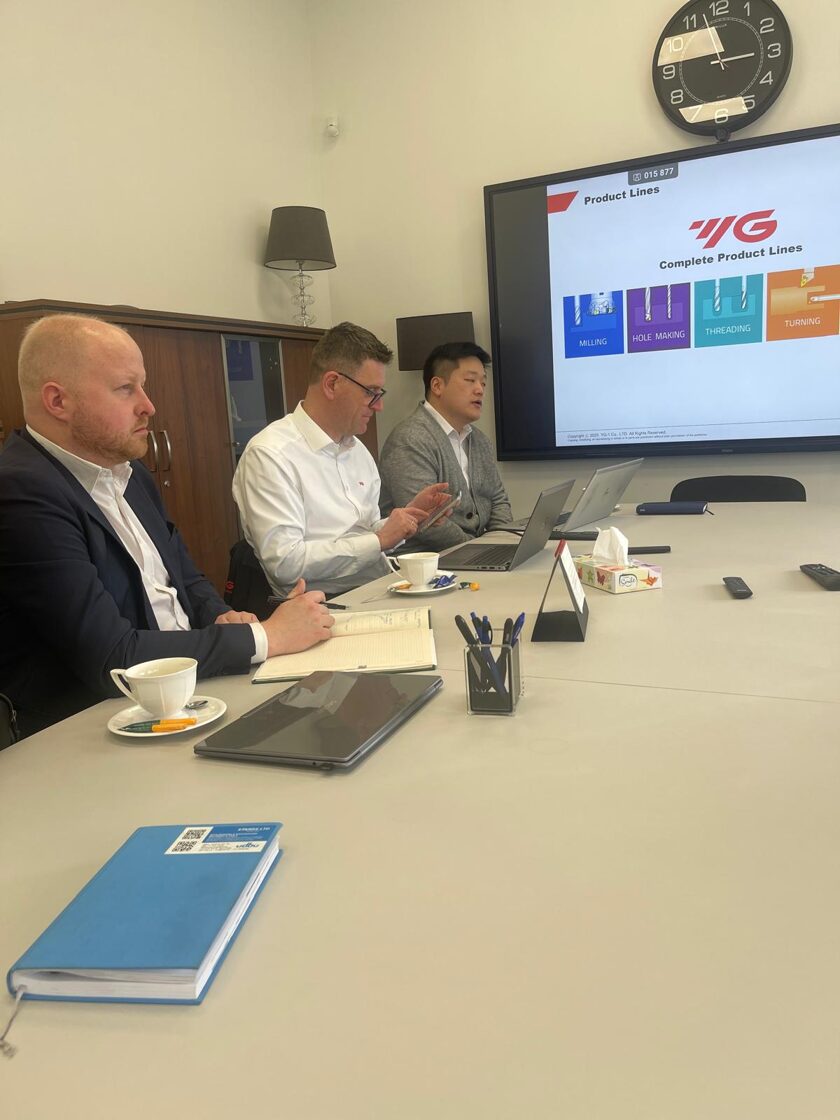
YG-1 representatives visited leading Latvian companies
In the second half of March, representatives of the international company YG-1 from South Korea and Poland visited Latvia on a business trip. The visit was organized in cooperation with the company’s official representative, STARBS, and marked an important step in developing collaboration with Latvian industrial companies.
YG-1 is one of the world’s leading manufacturers of metalworking tools, offering milling cutters, drills, and threading tools widely used in high-precision industries. Thanks to its international experience and innovative solutions, the company’s products are used worldwide.
During the visit, the delegation, together with STARBS representatives, visited several leading Latvian companies in the following sectors:
Aerospace (aviation and space industry in Latvia) — machining of complex materials such as titanium and composites, where precision and tool reliability are especially critical.
Optics (optical industry in Latvia) — production of high-precision components with strict quality requirements.
Automotive (automotive industry in Latvia) — mass production, where productivity and process stability are essential.
During the meetings, YG-1 specialists provided technical consultations, discussed current challenges faced by companies, and offered modern solutions in the field of metalworking. Particular attention was given to improving production efficiency, reducing costs, and implementing innovations.
Cooperation with the official representative STARBS is essential for YG-1’s development in the Baltic region. Local expertise and technical support enable Latvian companies to adopt advanced tooling solutions more quickly and strengthen their competitiveness.
At the conclusion of the visit, the parties acknowledged strong potential for further cooperation, the development of Latvian industry, and the strengthening of international partnerships.
Metalworking Costs in 2026: Prices in Latvia, Lithuania, and Estonia
 Metalworking Costs in 2026: Prices in Latvia, Lithuania, and Estonia
General Market Situation in the Baltics
In 2026, the metalworking industry in the Baltic states (Latvia, Lithuania, and Estonia) continues to grow steadily, while prices are increasing due to several key factors:
rising labor costs
higher energy and raw material prices
shortage of skilled CNC operators
It is important to understand that there is no fixed price for metalworking—each project is calculated individually.
Average Metalworking Prices in the Baltics (2026)
Below are typical market price ranges based on industry data:
CNC Machining (Milling and Turning)
€30 – €80 per hour — standard 3-axis machines
€70 – €150 per hour — 5-axis machining
from €25 per simple part (custom, low-volume orders)
Laser and Plasma Cutting
€10 – €50 per hour
€0.5 – €3 per meter of cut (depending on material thickness)
Welding and Fabrication
€20 – €60 per hour
complex projects — higher costs
Serial Production
cost reduction of:
20% – 50% per unit for higher volumes
the key factor is order volume and repeatability
Price Comparison: Latvia vs Lithuania vs Estonia
Latvia offers a balanced combination of price and quality, typically at a mid-range level.
Lithuania often provides lower pricing, making it attractive for serial production.
Estonia tends to have higher prices, but this is offset by a higher level of automation and efficiency.
The average price difference between these countries is around 10–25%.
Factors Affecting CNC Machining Costs
Material
aluminum — lower cost
stainless steel — 20–40% more expensive
titanium — 50–100% more expensive
Part Complexity
3-axis machining — more affordable
5-axis machining — more expensive
complex geometry increases machining time
Order Volume
1–10 units — higher cost per part
100+ units — significant cost reduction
Precision (Tolerances)
standard: ±0.1 mm
high precision — increases cost by 30–200%
Secondary Processes
anodizing
painting/coating
heat treatment
Cost Calculation Example
Part: aluminum, medium complexity
machining time: 2 hours
rate: €50/hour
Result:
CNC machining: €100
material: €20
post-processing: €30
Total: approximately €150 per part
How to Reduce Metalworking Costs
optimize part design (DFM – Design for Manufacturing)
increase production volume
choose a local supplier in the Baltics
use standard materials
Conclusion
In 2026:
the average CNC machining cost in the Baltics ranges from €30 to €150 per hour
the main cost drivers are part complexity, material, and production volume
Lithuania offers lower prices, while Estonia provides more advanced technological capabilities
For businesses, the key is not to choose the lowest price, but to find the optimal balance between cost, quality, and lead time.