
How to Choose Cutting Parameters for Stainless Steel Machining on SMEC CNC Machines
 How to Choose Cutting Parameters for Stainless Steel Machining on SMEC CNC Machines
Stainless steel is considered one of the most challenging materials for machining. Its high toughness, tendency to work harden, and intense heat generation require carefully selected cutting parameters. This is especially important when working with modern SMEC CNC machines, whose high rigidity and powerful spindles allow efficient machining of both AISI 304 and heat-resistant stainless steels.
Why Stainless Steel Is Difficult to Machine
The main challenges of stainless steel machining include:
rapid cutting tool wear;
built-up edge formation on the cutting insert;
excessive heat in the cutting zone;
vibrations caused by insufficient rigidity;
surface work hardening due to incorrect feed rates.
Because of these factors, standard cutting parameters used for carbon steel are not suitable for stainless steel.
Factors That Affect Cutting Parameters
When setting up a CNC machine, the following factors must be considered:
stainless steel grade;
machining operation type (turning, milling, drilling);
cutting tool material;
rigidity of the machine-tool-workpiece system;
coolant usage;
spindle power and guideway design.
For example, the SMEC SL 2000 CNC Turning Center features spindle speeds up to 6000 rpm and spindle power up to 18.5 kW, enabling stable stainless steel machining even under heavy cutting loads.
Recommended Cutting Parameters for Stainless Steel
Turning AISI 304 with Carbide Inserts
| Parameter | Rough Machining | Finish Machining |
|---|---|---|
| Cutting Speed (Vc) | 120–180 m/min | 180–250 m/min |
| Feed Rate (f) | 0.20–0.40 mm/rev | 0.05–0.15 mm/rev |
| Depth of Cut (ap) | 1.5–4 mm | 0.2–1 mm |
The most important rule is to avoid excessively low feed rates. Stainless steel hardens quickly, causing the tool to rub the surface instead of cutting effectively.
How SMEC Machines Improve Stainless Steel Machining
Modern SMEC CNC machines provide several advantages when machining difficult materials.
High Structural Rigidity
The SL series uses a reinforced machine structure and box guideways that reduce vibration during heavy-duty cutting operations.
Powerful Spindle Performance
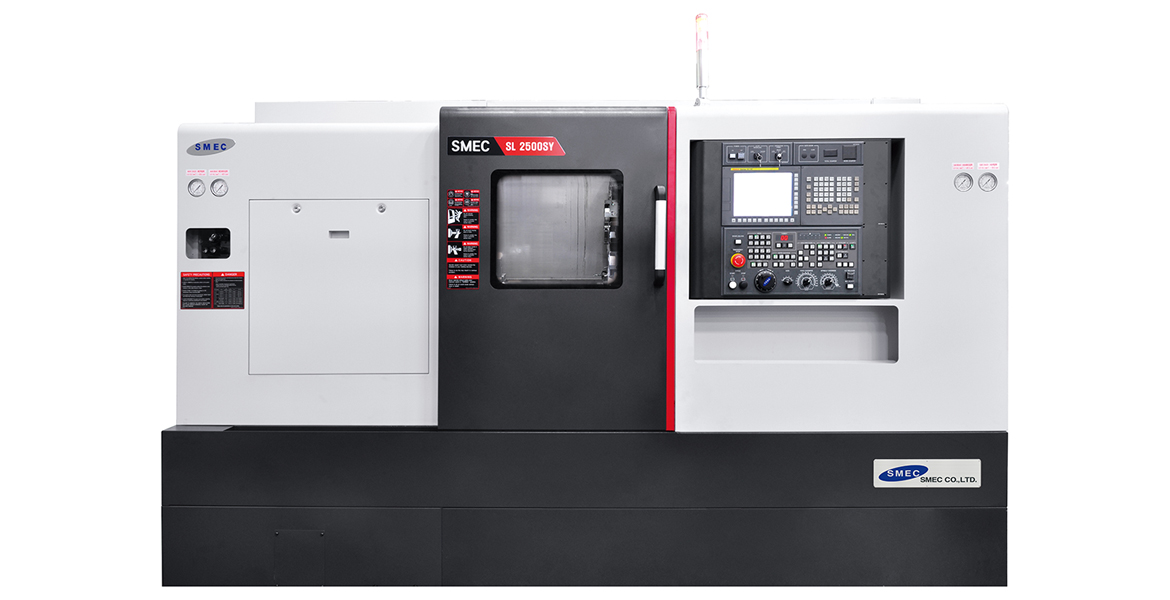
For example, the SMEC SL 2500SY CNC Turning Center is equipped with a spindle power of up to 26 kW and supports machining of parts longer than 1200 mm.
Fast Axis Rapid Traverse Rates
High rapid traverse speeds reduce idle time and improve productivity in serial production environments.
Live Tooling Capability
Machines with “M” and “Y” configurations support milling, drilling, and tapping in a single setup, which is especially valuable for complex stainless steel components.
Recommended Tooling for Stainless Steel
For stainless steel machining, it is recommended to use:
carbide tools with TiAlN or AlTiN coating;
inserts with positive geometry;
sharp cutting edges;
through-tool coolant systems.
When machining at high spindle speeds on SMEC machines, balanced high-quality tooling becomes especially important.
Common Mistakes When Selecting Cutting Parameters
Cutting Speed Too Low
This causes work hardening and accelerates tool wear.
Feed Rate Too Small
The cutting tool overheats and damages the surface finish.
Insufficient Cooling
Stainless steel has poor thermal conductivity, so overheating occurs very quickly.
Excessive Tool Overhang
Even highly rigid machines require minimal tool overhang to prevent vibration.
Practical Example for the SMEC SL 2000
When machining a 60 mm diameter AISI 304 shaft on the SMEC SL 2000 CNC Turning Center, the following parameters can be used:
Vc = 160 m/min;
spindle speed ≈ 850 rpm;
feed rate = 0.25 mm/rev;
depth of cut = 2 mm;
CNMG insert with TiAlN coating.
These parameters provide stable chip formation, minimal vibration, and long tool life.
Conclusion
Proper selection of cutting parameters for stainless steel machining directly affects tool life, surface quality, and CNC machining productivity. Thanks to their high rigidity, powerful spindles, and advanced control systems, SMEC machines are well suited for both serial production and high-precision stainless steel machining applications.