
Laser Welding of Thin Materials: Advantages, Limitations, and Comparison with TIG/MIG
Laser Welding of Thin Materials: Advantages, Limitations, and Comparison with TIG/MIG
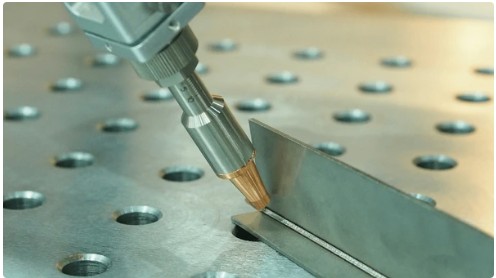
Laser welding is one of the most advanced technologies for joining thin metals (0.1–3 mm). It is widely used in mechanical engineering, electronics manufacturing, medical equipment production, and the automotive industry, where precision, minimal distortion, and high aesthetic quality are essential.
Due to its concentrated energy, a laser produces a narrow and deep weld seam with a minimal heat-affected zone (HAZ), which is especially important when working with thin sheets.
Main Laser Welding Methods
Heat Conduction (Conduction) Welding
Energy is evenly distributed across the surface without creating a “keyhole” effect. Suitable for very thin materials and applications with high aesthetic requirements.
Deep Penetration (Keyhole) Welding
High power density creates a vapor channel, enabling a deep and narrow weld seam with high strength.
Pulsed Laser Welding
Short pulses allow precise control of heat input. Ideal for micro-components and precision parts.
Hybrid Laser–Arc Welding
Combines laser and arc technologies to improve stability and compensate for joint gaps.
Advantages of Laser Welding
-
Minimal heat-affected zone
-
Very high precision
-
Low distortion
-
High processing speed
-
Clean and aesthetic weld seam
-
Easy integration into automated and CNC systems
Limitations
-
High equipment cost
-
Strict requirements for part preparation
-
Sensitivity to gaps and surface contamination
-
Need for skilled operators
Comparison: Laser Welding vs TIG/MIG for Thin Materials
| Parameter | Laser Welding | TIG Welding | MIG Welding |
|---|---|---|---|
| Material thickness | 0.1–3 mm (optimal) | from 0.5 mm | from 0.8 mm |
| Heat input | Low, concentrated | Medium | Higher |
| Heat-affected zone | Minimal | Medium | Wider |
| Burn-through risk | High if improperly set | Medium | Increased for thin materials |
| Sheet distortion | Minimal | Possible | Often significant |
| Welding speed | Very high | Low–medium | Medium–high |
| Weld precision | Very high | High | Medium |
| Weld aesthetics | Usually no post-processing required | Often requires cleaning | Usually requires cleaning |
| Automation | Excellent integration with CNC and robotics | Limited | Suitable for robotic systems |
| Edge preparation requirements | High | Medium | Less critical |
| Equipment cost | High | Medium | Lower than TIG |
| Operating costs | Low in serial production | Medium | Medium |
Conclusion
If the priority is precision, minimal distortion, and high productivity in serial manufacturing, laser welding is the most technologically and economically efficient long-term solution.
TIG welding remains a flexible option for small batches and repair work, while MIG welding is better suited for thicker materials or less demanding structural applications.