
Industry 4.0 in Metalworking: Digital Manufacturing Architecture and Practical Implementation Benefits
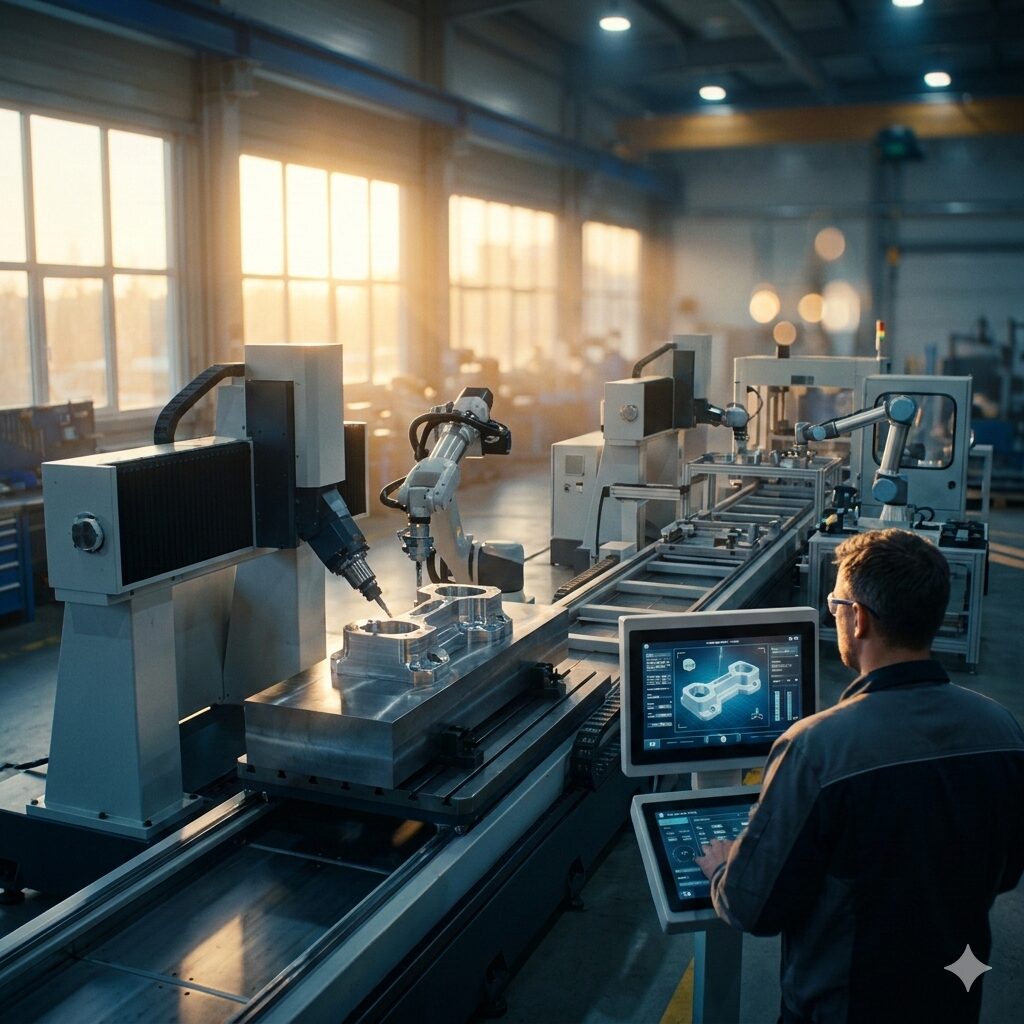 Industry 4.0 in Metalworking: Digital Manufacturing Architecture and Practical Implementation Benefits
1. Architecture of a Digital Metalworking Enterprise
In the context of metalworking, Industry 4.0 represents the development of a unified cyber-physical system (CPS) integrating:
-
CNC machines
-
CNC and PLC control systems
-
IIoT sensors
-
MES/ERP systems
-
CAD/CAM/PLM solutions
-
Analytics platforms
-
Cloud or edge infrastructure
The core principle is end-to-end data integration from the shop floor to the top floor.
A typical architecture includes:
Equipment Level (Level 0–1)
CNC machines, robots, measurement systems, vibration sensors, temperature sensors, spindle load monitoring, and tool condition sensors.
Data Acquisition Level (Level 2)
IIoT gateways, OPC UA, MTConnect, Modbus TCP/IP.
Manufacturing Operations Level (Level 3)
MES system:
-
Production dispatching
-
OEE monitoring
-
Order management
-
Full traceability
Business Analytics Level (Level 4)
ERP, BI systems, financial planning, KPI analytics.
2. CNC Integration into the Digital Ecosystem
Modern CNC machines act as high-frequency data sources, providing:
-
Spindle load
-
Cycle time
-
Axis acceleration
-
Drive currents
-
Tool condition data
-
Alarm and fault events
The key objective is not just data collection, but:
-
Normalization
-
Synchronization
-
Aggregation
-
Contextual interpretation
Without MES-level integration, raw machine data does not create business value.
3. OEE and Digital Production Transparency
Industry 4.0 enables the transition from subjective reporting to automated calculation of:
-
Availability
-
Performance
-
Quality
Practical impact:
-
Reduction of hidden downtime
-
Bottleneck identification
-
Accurate capacity planning
Digitally mature enterprises typically achieve a 10–25% OEE increase after implementation.
4. Predictive Maintenance Using Machine Learning
In metalworking, the main sources of unplanned downtime include:
-
Spindle wear
-
Bearing degradation
-
Tool wear
-
Overheating
-
Vibration deviations
ML algorithms analyze:
-
Vibration spectra
-
Temperature trends
-
Current anomalies
-
Cycle time variations
Results:
-
Up to 40% reduction in emergency downtime
-
Transition from scheduled to condition-based maintenance
-
Reduced spare parts costs
5. Digital Twins in Technological Processes
In metalworking, digital twins are used for:
-
Cutting parameter simulation
-
Toolpath optimization
-
Thermal deformation analysis
-
Tool wear prediction
Integration with CAM systems enables:
-
Program verification before execution
-
Reduced setup time
-
Lower scrap rates during new batch launches
This is particularly critical for high-precision and small-batch production.
6. Robotics and Autonomous Manufacturing Cells
Industry 4.0 in metalworking includes:
-
Robotic loading and unloading
-
Automatic pallet changing
-
Flexible Manufacturing Systems (FMS)
Benefits:
-
24/7 operation without increasing headcount
-
Stable and repeatable quality
-
Reduced dependency on human factors
The average ROI of a robotic cell is 18–36 months in serial production environments.
7. Industrial Network Cybersecurity
Digitalization increases the attack surface:
-
Remote CNC access
-
Cloud service integration
-
ERP/MES connectivity to machines
Required measures include:
-
IT/OT network segmentation
-
Role-based access control (RBAC)
-
Event logging
-
Regular firmware and software updates
-
Data transmission protocol audits
A cybersecurity incident can result in complete production shutdown.
8. Implementation Economic Model
Investment areas typically include:
-
Equipment modernization
-
MES implementation
-
IIoT infrastructure
-
Analytics solutions
-
Workforce training
Financial benefits:
-
Scrap reduction
-
Downtime reduction
-
WIP inventory optimization
-
Faster order fulfillment
-
More accurate profitability analysis
In the B2B segment, digital traceability significantly increases customer trust.
9. Equipment Readiness for Industry 4.0: The Strategic Starting Point
The transition to digital manufacturing is impossible without a solid technological foundation. If existing machines do not support OPC UA, MTConnect, or reliable data transmission, digitalization will be fragmented and costly.
UDBU supplies modern metalworking machines designed to meet Industry 4.0 requirements:
-
MES and ERP integration capability
-
IIoT sensor connectivity readiness
-
Digital machine condition monitoring
-
Remote diagnostics capability
-
Compatibility with robotic manufacturing cells
Investing in Industry 4.0-ready equipment enables companies to:
-
Reduce implementation timelines
-
Minimize infrastructure adaptation costs
-
Reach target OEE levels faster
-
Ensure scalable production growth
If your company’s strategy includes increasing digital maturity and strengthening competitiveness in the B2B market, selecting the right machine park is a fundamental step.
Contact UDBU specialists to select machines ready for operation within an integrated digital manufacturing environment.
Conclusion
Industry 4.0 in metalworking is not about isolated technology upgrades — it is a systematic transformation of manufacturing architecture.
Companies that:
-
Ensure end-to-end data integration
-
Implement MES and predictive analytics
-
Automate production cells
-
Invest in cybersecurity and modern equipment
gain sustainable competitive advantages through transparency, controlled cost structures, and predictable product quality.