
Ultrasonic Cleaning of Parts After Machining
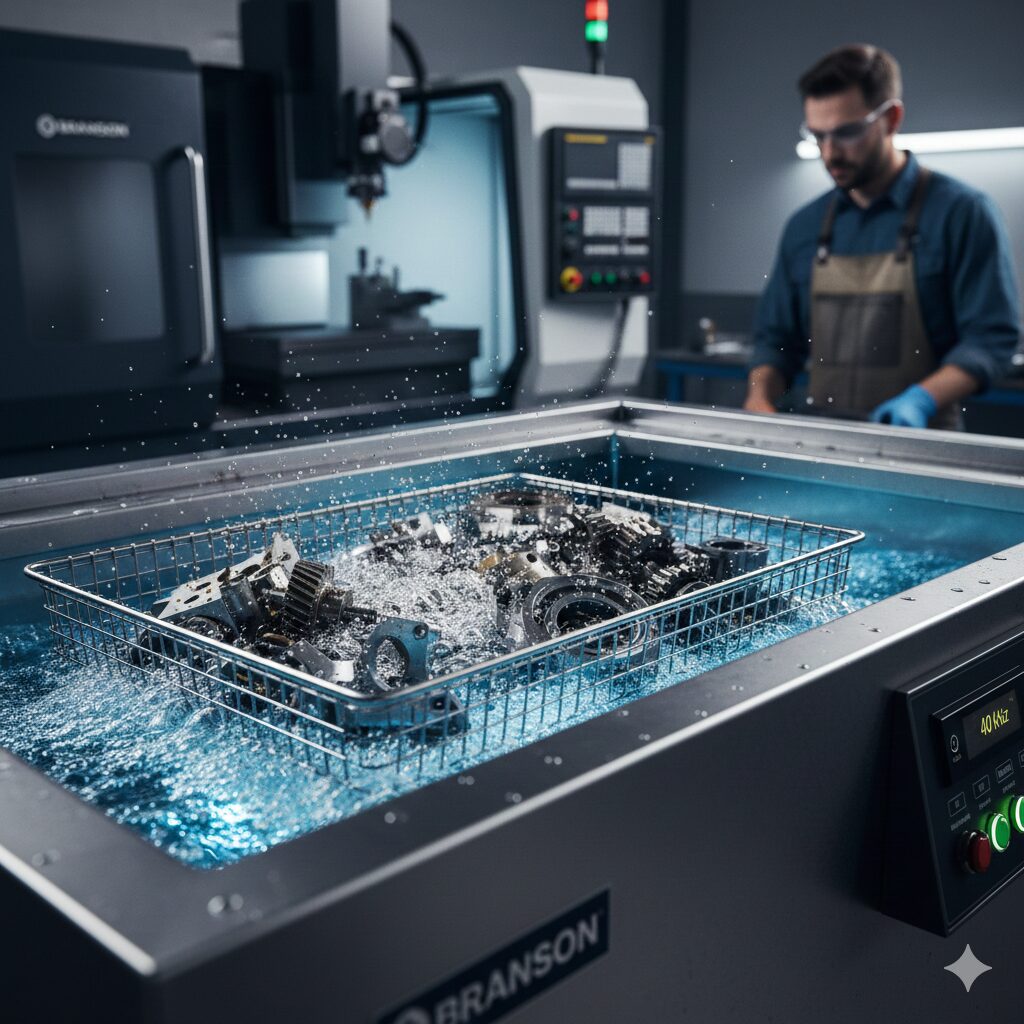 Ultrasonic Cleaning of Parts After Machining
Introduction
After machining, parts retain oils, coolants, abrasive particles, metal chips, and micro-contaminants. Even minimal residues can negatively affect coating adhesion, assembly accuracy, and surface appearance. Ultrasonic cleaning is one of the most effective methods to achieve a high level of cleanliness without damaging the surface.
Principle of Ultrasonic Cleaning
The process is based on the cavitation effect: ultrasonic waves (typically 20–40 kHz) generate millions of microscopic bubbles in the liquid. When these bubbles collapse, they remove contaminants even from hard-to-reach areas such as holes, threads, grooves, and microcracks.
Types of Contaminants Removed
-
cutting fluids and oil residues;
-
metal dust and abrasive particles;
-
grinding and polishing compounds;
-
corrosion and oxidation products;
-
fingerprints and organic contaminants.
Key Advantages
-
High efficiency for complex geometries
-
No mechanical damage to precision surfaces
-
Reduced cleaning time
-
Consistent quality in serial production
-
Lower defect rates before coating or assembly
Selection of Cleaning Solutions
-
water-based alkaline solutions for oils and coolants;
-
neutral solutions for aluminum and non-ferrous metals;
-
specialized solutions for medical and precision components.
Main Process Parameters
-
Frequency:
-
20–28 kHz — heavy contamination
-
35–45 kHz — delicate and precision parts
-
-
Temperature: 40–60 °C
-
Cleaning time: 2–15 minutes
-
Power: adjusted to tank volume and load
Common Mistakes
-
using an unsuitable cleaning solution;
-
excessive temperature;
-
too much power for thin-walled parts;
-
insufficient rinsing and drying.
Areas of Application
-
mechanical and precision engineering;
-
automotive and aerospace industries;
-
medical device manufacturing;
-
preparation for electroplating, anodizing, and painting.
Conclusion
Ultrasonic cleaning is not just a washing step but a critical operation that directly impacts product quality, reliability, and production efficiency.