
Review of GDW Brand Machines
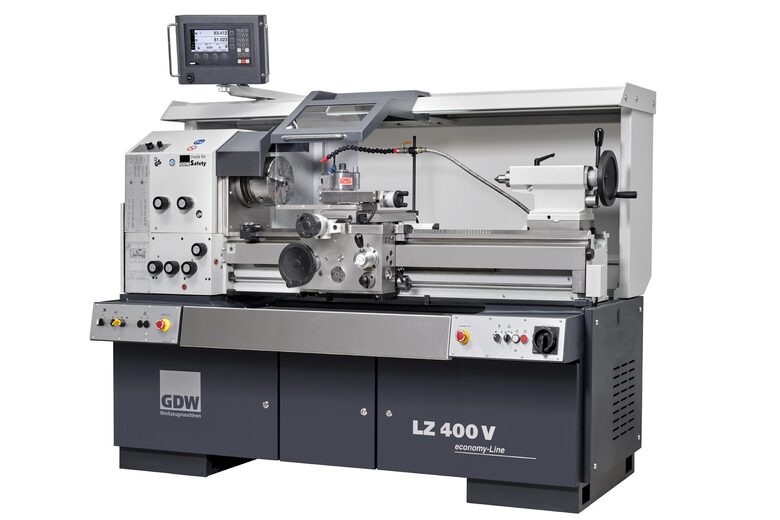 Review of GDW Brand Machines
GDW is a German manufacturer of lathes and metalworking machines, renowned for its specialization in precision machining. The brand's products are focused on high precision, durability, ease of operation, and application in a wide range of fields — from toolmaking and mechanical engineering to training centers.
The UDBU dealer website features various models of GDW lathes, including universal machines with digital readouts, traditional models with manual control and digital displays, as well as specialized versions.
Main GDW Models
GDW LZ 250SN‑H / LZ 250VS‑H
Basic entry-level universal lathes. Usually used for small-scale work and models with a short distance between centers. They are equipped with standard digital readouts or mechanical handles, making them suitable for training and low-complexity series.
GDW LZ 280VS‑G / LZ 280VS‑H
Improved versions of the 2800 series with digital control and teaching capabilities (e.g., process visualization, project preparation). These models are more frequently chosen for technical colleges and production facilities with small batches.
GDW LZ 330 V (Key Model)
This is one of the most popular models in the lineup and one of the most technological among traditional GDW lathes. It comes standard with a 3-axis digital readout and color display, stepless speed adjustment, a cooling system, and centralized lubrication.
Parameters of GDW LZ 330 V:
Swing over bed: 330 mm
Maximum spindle speed up to 4000 rpm
Applicable for processing steel, aluminum, and stainless steel
Equipped for precision thread cutting and basic digital control
Reliability of German engineering at a moderate cost
Why GDW LZ 330 V stands out: thanks to the optimal balance between technology, versatility, and price, this model is often considered the best choice for small production facilities and workshops where precision and affordability are critical.
GDW LZ 350 and LZ 360 S
Larger machines with an increased distance between centers (about 800 mm) and greater flexibility for processing longer or more massive parts. These models are suitable for heavier tasks but are usually more expensive and require more installation space.
Other GDW Models
The market also features large universal machines from the LZ 600 line and special machining centers, which indicates a fairly wide range from the manufacturer.
Comparison of Key GDW Models
| Model | Purpose | Diameter, mm | Distance Between Centers, mm | Spindle Speed | Features |
| LZ 250SN / 250VS | Basic universal | ~250 | ~500–600 | ~30–4000 | Simplest control |
| LZ 280VS‑G / VS‑H | Middle class | ~280 | ~670 | ~30–4000 | Digital display |
| LZ 330 V | Optimal choice | 330 | 670 | 30–4000 | Price/quality balance |
| LZ 350 | Expanded capabilities | ~310 | ~800 | ~45–2000 | More powerful |
| LZ 360 S | Large working area | ~355 | ~800 | ~30–3000 | Suitable for heavier work |
The provided comparison is indicative — specific parameters may vary depending on the configuration and year of manufacture.
GDW: Where and for What They Are Used
GDW machines are used in:
toolmaking and mechanical engineering production
repair and service workshops
training centers and technical colleges
small-batch production
aviation and automotive industries
GDW is valued by many users for its precision, broad compatibility with tooling systems, and the presence of digital readouts on most models.
Summary — Best Price/Quality Model
The GDW LZ 330 V stands out as the optimal choice for most tasks, offering:
an excellent combination of power and versatility;
expanded digital control functions;
applications in a wide range of production tasks;
a relatively moderate cost compared to large-scale machines.
Therefore, it can be recommended as the most technological model in terms of price/quality ratio among traditional GDW lathes.