
Inovācijas gaisa attīrīšanas filtros: HEPA, aktīvā ogle un jaunās tehnoloģijas
Innovations in Air Purification Filters: HEPA, Activated Carbon, and New Technologies
In modern metalworking environments, air quality directly impacts production safety, personnel health, equipment efficiency, and operational costs. The filter is the core component of any air purifier or extraction system. Let’s explore the filtration technologies used today and how they tackle oil mist, aerosols, and toxic particles.
1. Multi-stage Filtration Systems: From Coarse to Fine Cleaning
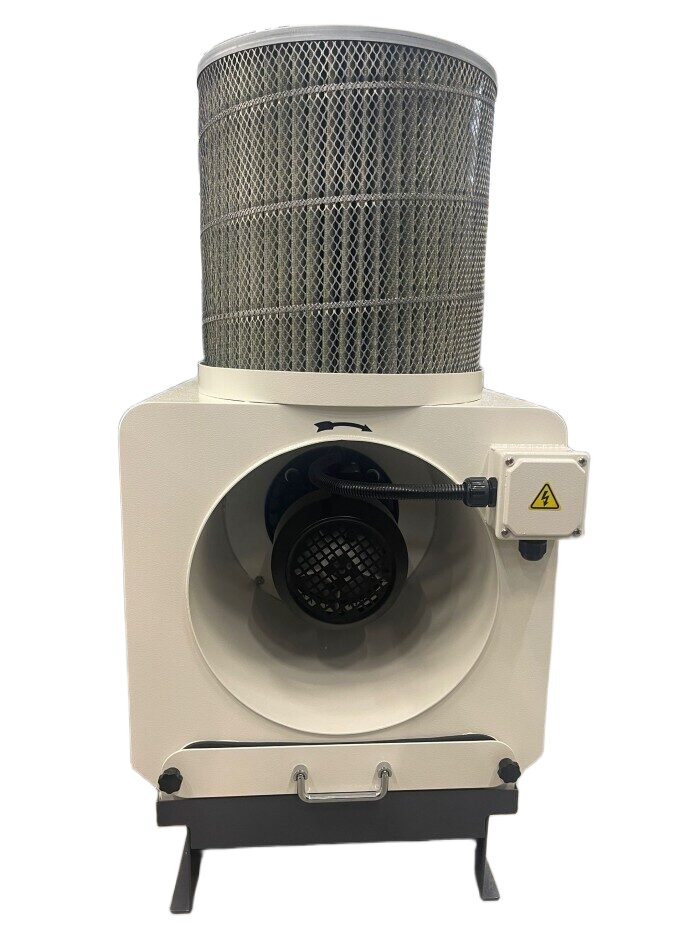
Modern oil mist collectors, such as the Precitonix OMM 150, utilize a combined filtration approach. While specific filter types may vary by model, these devices typically operate as multi-stage systems capable of capturing up to 99% of contaminants (aerosols, coolant vapors, and oil mist) through a combination of centrifugal separation and a final post-stage filter. These systems first mechanically separate large droplets before passing the airflow through finer elements for final purification.
2. HEPA Filters — The High-Efficiency Standard
HEPA (High Efficiency Particulate Air) is a globally recognized standard for capturing ultra-fine particles. These filters ensure the retention of up to 99.97% of particles as small as 0.3 µm. In metalworking, HEPA elements are often installed as a secondary stage following centrifugal or mechanical filters to eliminate residual aerosols and sub-micron particles, significantly improving air quality and reducing respiratory risks for personnel.
3. Activated Carbon — Combatting Gases and Odors
Activated carbon is an adsorption filter that does more than just trap solid particles; it captures gaseous components, VOCs (volatile organic compounds), odors, and chemical fumes. In the context of metalworking and oil mist extraction, it helps reduce unpleasant emissions and improves the overall quality of the exhausted air, often working in tandem with HEPA elements for comprehensive purification.
4. New Technologies: Electrostatic and Self-Regenerating Filters
Beyond traditional HEPA and carbon filters, innovative technologies are entering the market:
Electrostatic Filtration: Uses an electric charge to attract and capture particles, reducing the load on mechanical filters and extending their service life.
Self-Regenerating Materials: Filters based on graphene or ceramic meshes capable of cleaning themselves through electrical heating, thereby reducing maintenance costs.
Choosing the Right Filter for Metalworking
When selecting filtration elements, it is crucial to consider the type of contaminants (oil mist, vapors, solids), the required filtration efficiency, operating conditions (humidity, temperature), and the ease of maintenance and replacement costs.
Conclusion
Air filtration in metalworking is no longer an option but a necessity for operational safety and efficiency. Combined multi-stage systems, such as the one used in the Precitonix OMM 150, effectively handle the most demanding tasks in oil mist and aerosol purification.