
Intelligent Cooling Control in High-Speed Machining
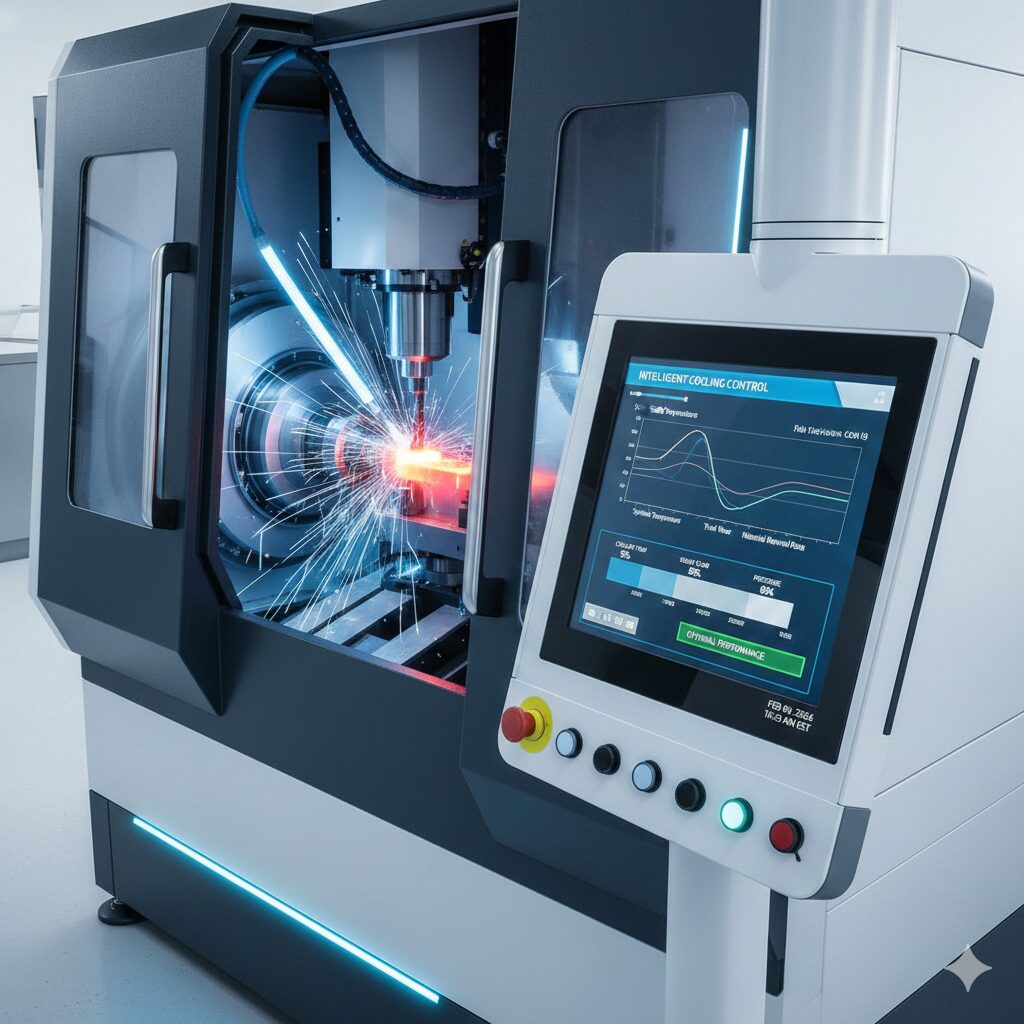 Intelligent Cooling Control in High-Speed Machining
High-speed machining (HSM – High Speed Machining) places increased demands on cooling systems. As spindle speeds and feed rates rise, thermal loads on cutting tools, workpieces, and machine components increase significantly. Traditional coolant delivery methods often become insufficient, making intelligent cooling control a key factor in modern manufacturing.
Why Conventional Cooling Is Not Enough
Temperatures in the cutting zone can exceed 800–1000 °C, leading to:
-
accelerated tool wear;
-
thermal deformation of parts;
-
reduced surface quality;
-
microcracks and burn marks.
Fixed coolant parameters fail to adapt to changing machining conditions.
What Is Intelligent Cooling
Intelligent cooling systems adapt coolant delivery in real time based on sensor data and machining parameters.
They monitor:
-
cutting zone temperature;
-
spindle load;
-
vibration;
-
cutting speed and feed rate;
-
tool condition.
Based on this data, the system automatically adjusts:
-
coolant pressure and flow rate;
-
delivery direction;
-
MQL or cryogenic cooling modes;
-
activation timing.
Key Technologies
-
Real-time monitoring with sensors
-
High-pressure coolant systems (HPC)
-
Adaptive minimum quantity lubrication (MQL)
-
Cryogenic cooling using liquid nitrogen or CO₂
-
Integration with CNC and CAM systems
Benefits
-
20–50% longer tool life;
-
improved dimensional stability;
-
higher surface quality;
-
reduced coolant consumption;
-
increased machine productivity.
The Future of Cooling Systems
The next stage involves artificial intelligence and digital twins, enabling predictive thermal management even before machining begins.