
The Future of Metalworking: Trends for 2026 and Beyond
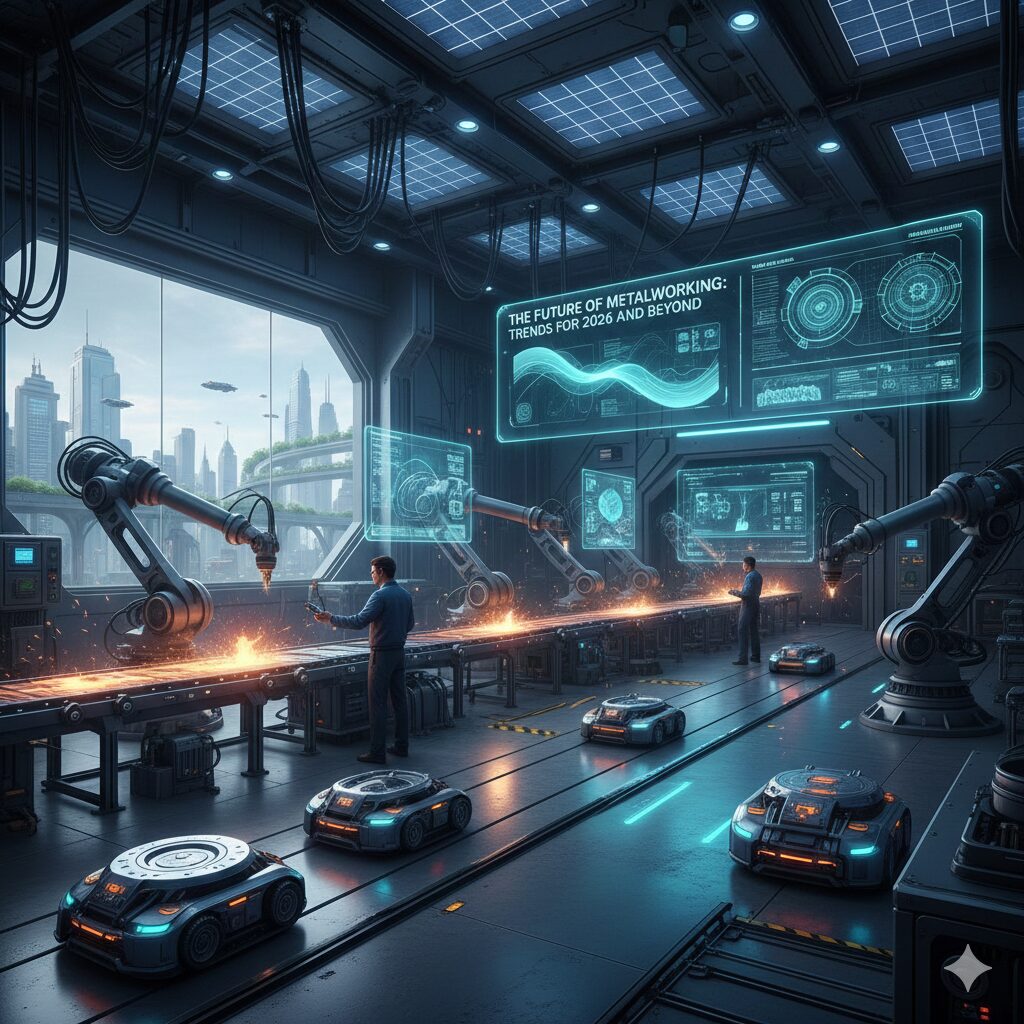 The Future of Metalworking: Trends for 2026 and Beyond
The metalworking industry is entering a phase of deep transformation. Increasing demands for precision, shorter production cycles, a shortage of skilled labor, and growing sustainability requirements are forcing manufacturers to rethink traditional approaches. From 2026 onward, competitiveness will be defined not only by machine capabilities but also by the level of digital maturity.
Below are the key technological and organizational trends shaping the future of metalworking.
1. Intelligent Automation and Artificial Intelligence
Artificial intelligence is becoming a practical production tool rather than an experimental technology. In metalworking, AI is used for:
-
predicting tool wear and failure,
-
real-time optimization of cutting parameters,
-
early detection of process deviations,
-
automated setup optimization.
By 2026+, AI will be increasingly integrated directly into CNC controls and MES systems, improving process stability and reducing human dependency.
2. Digital Twins of Machines and Processes
Digital twin technology enables virtual replicas of machines, production lines, or entire facilities. This allows manufacturers to:
-
test new parts without risk to physical equipment,
-
optimize toolpaths and cutting data in advance,
-
identify production bottlenecks,
-
significantly reduce setup and ramp-up time.
For high-precision and serial production, digital twins are becoming an industry standard.
3. Hybrid Manufacturing Technologies
The combination of additive manufacturing and conventional machining opens new production possibilities:
-
near-net-shape part manufacturing with final machining,
-
repair and refurbishment of high-value components,
-
reduced material waste,
-
creation of functional internal structures.
Hybrid solutions are especially relevant for aerospace, energy, and medical industries.
4. Smart Factories and IIoT
Industrial IoT enables continuous data collection from machines, tools, and fixtures, providing:
-
full production transparency,
-
machine utilization monitoring,
-
reduced downtime,
-
remote diagnostics and condition monitoring.
By 2026, smart factories will increasingly move from data collection to autonomous decision-making based on analytics.
5. Advanced Materials and Cutting Tools
Modern manufacturing increasingly relies on difficult-to-machine materials such as:
-
titanium and nickel-based alloys,
-
high-strength steels,
-
composite and hybrid materials.
This drives the development of advanced cutting tools with improved coatings, geometries, and vibration-damping properties. Cutting tools are becoming a strategic productivity factor rather than a consumable.
6. Sustainable and Energy-Efficient Manufacturing
Environmental regulations and rising energy costs accelerate the adoption of sustainable solutions:
-
minimum quantity lubrication (MQL),
-
recycling of chips and waste,
-
energy-efficient drives and spindles,
-
reduced carbon footprint.
Sustainability is increasingly a decisive factor in supplier selection.
7. Multi-Axis and Ultra-Precision Machining
5-axis and advanced multi-axis machines allow manufacturers to:
-
reduce the number of setups,
-
improve geometric accuracy,
-
shorten overall machining time,
-
ensure consistent quality in high-volume production.
The future points toward integrated machining centers combining multiple operations in a single setup.
8. Manufacturing Flexibility and Customization
Market demand for small batches and customized parts continues to grow, driving the development of:
-
fast changeover solutions,
-
flexible automated production lines,
-
modular fixturing systems,
-
software-driven production routing.
Flexibility is becoming more critical than maximum single-machine output.
9. Workforce Skills and Competence Development
Advanced manufacturing requires a new skill set. Modern operators and engineers must understand:
-
digital control systems,
-
advanced CAM strategies,
-
data analysis,
-
automation and robotics.
Training and upskilling are becoming strategic investments for long-term competitiveness.
Conclusion
The future of metalworking lies in the integration of precision mechanics, digital technologies, and sustainable manufacturing principles. Companies that invest early in automation, digitalization, and workforce development will secure a strong competitive position in 2026 and beyond.