
Integrated Air Filtration System in a Metalworking Workshop: From Aspiration to Filtration
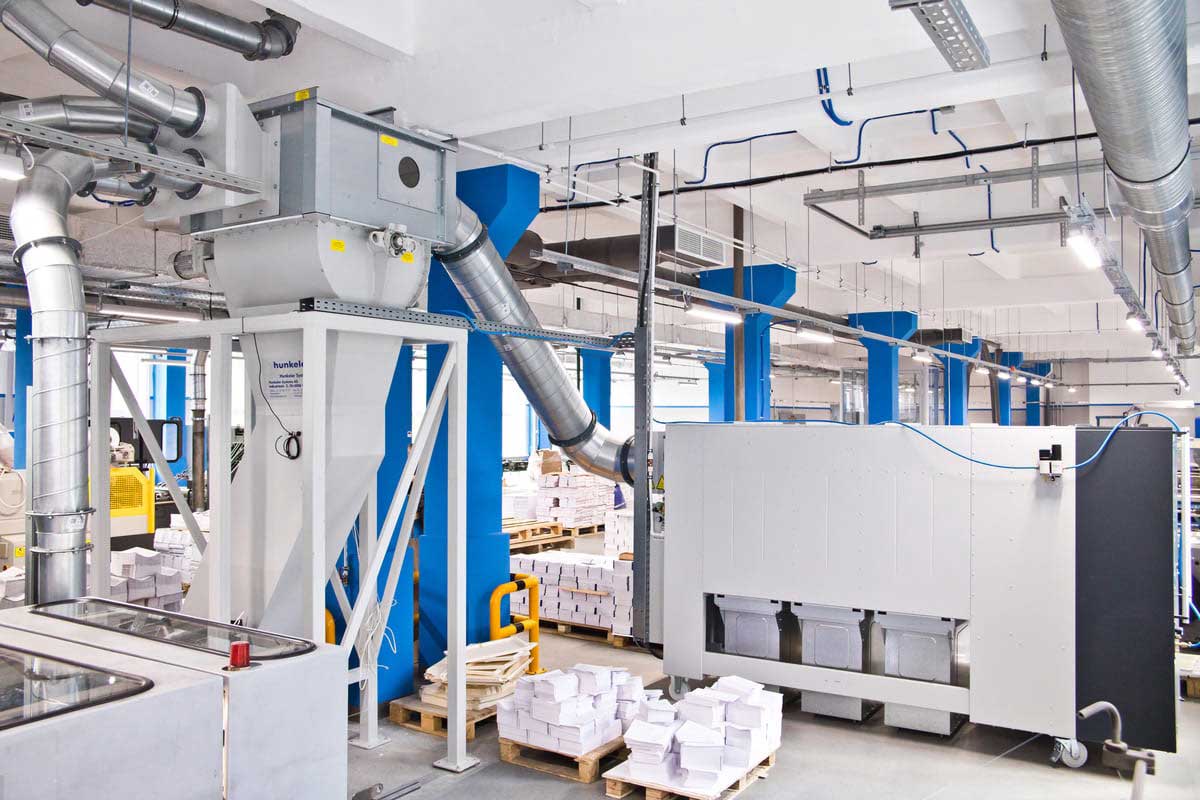 Integrated Air Filtration System in a Metalworking Workshop: From Aspiration to Filtration
In a modern metalworking workshop, air pollution rarely originates from a single source. CNC milling, turning, grinding, and drilling simultaneously generate oil mist, aerosols, smoke, and fine particles. Therefore, more and more companies are moving from standalone solutions to integrated air filtration systems that connect multiple machines into a single aspiration and filtration network.
What Is an Integrated Air Filtration System?
An integrated system is a centralized solution where:
-
multiple production machines are connected to one aspiration network,
-
contaminated air is collected, transported, and filtered centrally,
-
uniform airflow is maintained throughout the workshop.
This approach allows better control of air quality and reduces operating costs.
1. Aspiration — Capturing Pollution at the Source
The first and most critical stage of the system is effective aspiration. The closer the extraction point is to the pollution source, the less oil mist escapes into the workspace.
Key considerations:
-
correctly selected connection points for each CNC machine,
-
optimal airflow velocity,
-
minimal air losses at joints and transitions.
Insufficient aspiration cannot be compensated even by a very powerful filter.
2. Ductwork System Design
The foundation of an integrated system is a properly designed ductwork network. Errors at this stage significantly reduce the overall system efficiency.
When designing, it is important to consider:
-
duct diameters and lengths,
-
number of bends and branches,
-
airflow balancing between machines.
Proper balancing ensures that each machine receives the required extraction capacity.
3. Connecting Multiple Machines into One System
When connecting several machines, it is essential to understand that:
-
different processes generate different pollution loads,
-
not all machines operate simultaneously,
-
flexible airflow regulation is required.
In practice, this involves using:
-
automatic or manual dampers,
-
airflow regulators,
-
control systems that adapt capacity to actual demand.
4. Filtration Stage — Choosing the Right Technology
In an integrated system, filtration is centralized, making filter selection critically important.
Depending on the type of contamination, the following are used:
-
mechanical and coalescing filters for oil mist,
-
electrostatic filters for fine aerosols and smoke,
-
HEPA filters for final-stage purification.
In many cases, multi-stage filtration solutions deliver the best results.
5. Clean Air Recirculation or Exhaust
After filtration, a strategic decision must be made:
-
to recirculate cleaned air back into the workshop,
-
or to exhaust it outside.
Air recirculation helps:
-
reduce heating and cooling costs,
-
improve energy efficiency.
However, it is only acceptable if the filtration level complies with applicable regulations.
6. Maintenance and System Sustainability
An integrated system requires regular but predictable maintenance. At the design stage, it is important to provide:
-
easy access to filters,
-
condensate and oil collection,
-
monitoring capabilities (pressure drop, filter condition).
This minimizes downtime and extends the system’s service life.
Why Choose an Integrated Solution?
Compared to standalone mist collectors, an integrated system offers:
-
consistent air quality throughout the workshop,
-
lower long-term operating costs,
-
easier maintenance and control,
-
a higher level of workplace safety.
Conclusion
An integrated air filtration system in a metalworking workshop is not just a technical upgrade—it is an investment in employee health, production stability, and long-term sustainability. By correctly integrating aspiration, ducting, and filtration into a single system, maximum efficiency can be achieved at optimized costs.