
Oil Mist Collection Methods in Metalworking Processes: Technologies and Practice
 Oil Mist Collection Methods in Metalworking Processes: Technologies and Practice
In metalworking processes that use cutting and cooling fluids, oil aerosols—commonly referred to as oil mist—are inevitably released into the air. Oil mist is generated during turning, milling, grinding, drilling, and cutting operations, especially at high spindle speeds.
The accumulation of oil mist in production areas negatively affects worker health, equipment condition, and product quality. This article reviews the main technologies for oil aerosol collection and their practical application in metalworking facilities.
Why Oil Mist Must Be Removed
Oil mist consists of droplets ranging from several microns to submicron particles. Without effective air cleaning systems, it leads to:
-
deterioration of indoor air quality;
-
increased respiratory health risks for operators;
-
oil deposits on machines and electronic components;
-
increased fire hazards;
-
reduced machining accuracy.
Local Source Capture
The most effective approach is to capture oil mist directly at the point of generation using:
-
integrated extraction ports in CNC machines;
-
local exhaust hoods and enclosures;
-
maintaining negative pressure inside the machining area.
Key Filtration Technologies
Mechanical Pre-Filtration
Removes large oil droplets and solid contaminants, protecting downstream filters.
Coalescing Filtration
Fine droplets merge into larger ones and are drained by gravity.
Fine and HEPA Filtration
Provides high-efficiency removal of residual submicron aerosols, especially when air is recirculated.
Centralized vs. Standalone Systems
-
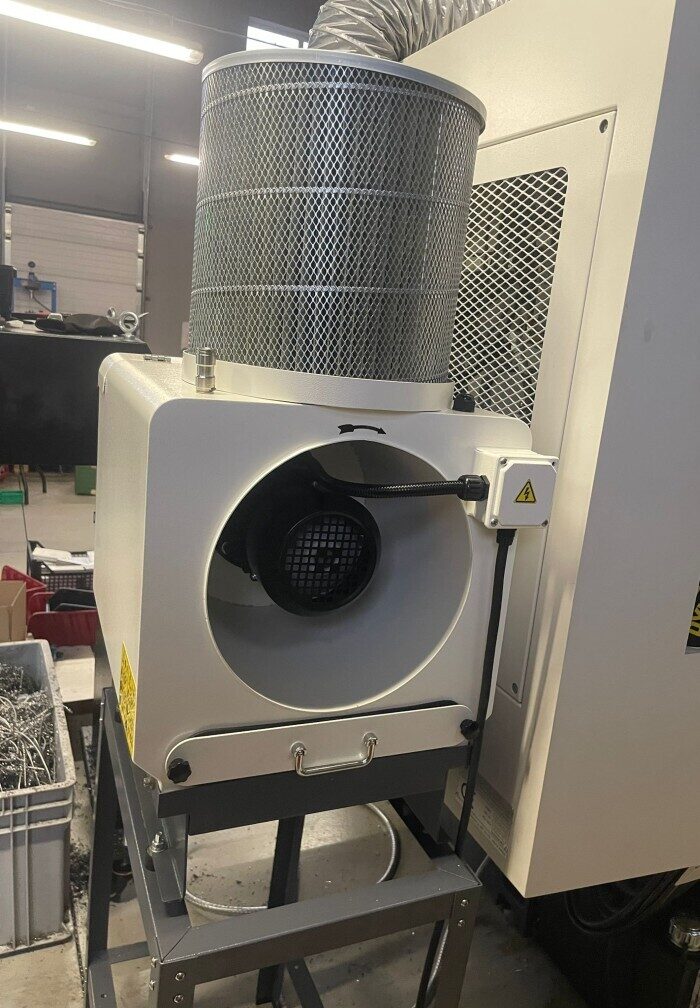
Standalone units — installed on individual machines
-
Centralized systems — serve multiple machines from a single filtration unit
System selection depends on production scale and facility layout.
Conclusion
Effective oil mist collection is a critical component of safe and efficient metalworking operations. Properly designed multi-stage filtration systems improve workplace conditions, extend equipment lifespan, and reduce operating costs.