
Machining Complex Surfaces: 5-Axis Programming Strategies
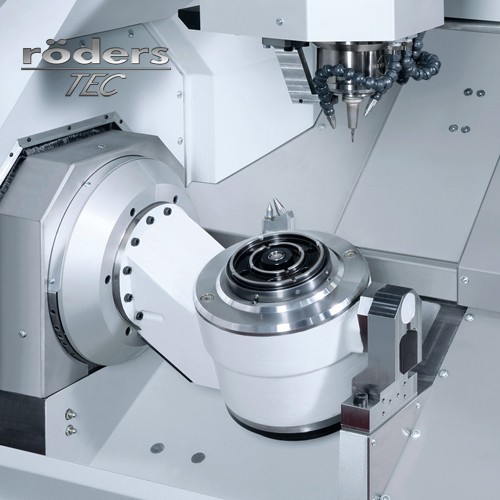
Machining Complex Surfaces: 5-Axis Programming Strategies
Modern components increasingly feature complex spatial geometry and high requirements for accuracy and surface quality. Under these conditions, 5-axis machining becomes a key technology for expanding manufacturing capabilities and improving efficiency. However, maximum benefits can only be achieved through proper programming and the correct selection of machining strategies.
Characteristics of Complex Surface Machining
Complex surfaces include:
-
freeform surfaces;
-
curved and transitional geometries;
-
parts with undercuts and hard-to-reach areas;
-
surfaces with strict requirements for roughness and geometric accuracy.
The main objective of 5-axis programming is to maintain stable tool contact with the surface, minimize vibrations, and avoid collisions while preserving high productivity.
Strategy Selection
The chosen strategy directly affects surface quality and cycle time. Common approaches include:
Constant tool tilt angle machining
Ensures even load distribution on the cutting edge and improves surface quality, especially when using ball-nose or toroidal cutters.
Surface-based machining
The tool follows the mathematical surface model, providing high form accuracy and minimal deviation.
Contact point control strategies
Managing the tool contact point reduces wear, prevents dwell marks, and ensures consistent surface roughness.
Optimized toolpaths with constant load
Used to reduce dynamic loads and improve process stability when machining complex contours.
Tool Orientation Control
Tool orientation is a critical factor in 5-axis machining. Proper control of tilt and rotation allows:
-
collision avoidance with the part and fixtures;
-
reduced tool overhang;
-
improved cutting conditions;
-
extended tool life.
Modern CAM systems offer automatic and semi-automatic orientation optimization, but results must always be verified.
Transitions, Smoothing, and Surface Quality
Special attention should be paid to:
-
smooth transitions between toolpaths;
-
avoidance of abrupt axis orientation changes;
-
trajectory smoothing;
-
minimization of stops and sharp accelerations.
Correct smoothing settings have a direct impact on visual surface quality and machine motion stability.
Simulation and Program Verification
Before running 5-axis machining, detailed simulation is essential:
-
collision detection;
-
machine kinematics analysis;
-
axis limit verification;
-
cycle time evaluation.
Simulation helps prevent costly errors and refine strategies at the programming stage.
Practical Recommendations
For stable results in 5-axis machining of complex surfaces:
-
start with proven and conservative strategies;
-
use high-quality CAD models and correct tolerances;
-
minimize sudden tool orientation changes;
-
test programs in dry runs;
-
consider the real dynamic capabilities of the machine.
Conclusion
5-axis programming unlocks significant potential for machining complex surfaces but requires a systematic approach. Correct strategy selection, controlled tool orientation, and thorough simulation ensure high accuracy, consistent quality, and efficient use of equipment.